


Over 340K cyclists were injured on local roads across the USA in 2023. More crucially, 1,377 persons lost their lives in these accidents. At the same time, a 10-year Emergency Department visit survey (from 2009 to 2018) showed that over 600K ER visits were made by injured bicyclists suffering from a traumatic brain injury. These figures demonstrate that bike crash injuries can be far more severe than the typical rider believes.
What most bicyclists do not know is that there’s always room for hidden and delayed symptoms, like, for example, head injuries or internal organ damage. If a rider can even approximately assess the severity of their injuries in the first moments after the crash, they can decrease the risk of life-threatening complications. With that in mind, today we’ll dive deep into the matter and explain which symptoms should never be overlooked.
- Types of Bicycle Accident Injuries: From Minor to Catastrophic
- Head and Brain Injuries
- Spinal Cord and Back Injuries
- Fractures and Broken Bones
- Soft Tissue Injuries and Hidden Trauma
- Psychological and Emotional Trauma
- Delayed Symptoms — When Injuries Appear Later
- What to Do After a Bicycle Accident?
- Consult an Experienced Bicycle Accident Lawyer
- Get a FREE case evaluation today
Types of Bicycle Accident Injuries: From Minor to Catastrophic
Even when two bicyclists get into similar accidents, the chances that they will incur identical traumas are slim because there are always distinct factors at play. The speed of the vehicle, its position, the rider’s gear, and other characteristics have different effects on the severity of the damage.
The actual injuries can be categorized as minor, moderate, or catastrophic. Knowing which category your trauma fits into will help you estimate how long it will take to recover, keep an eye out for any concealed signs, and take the appropriate action to keep your condition from getting worse.
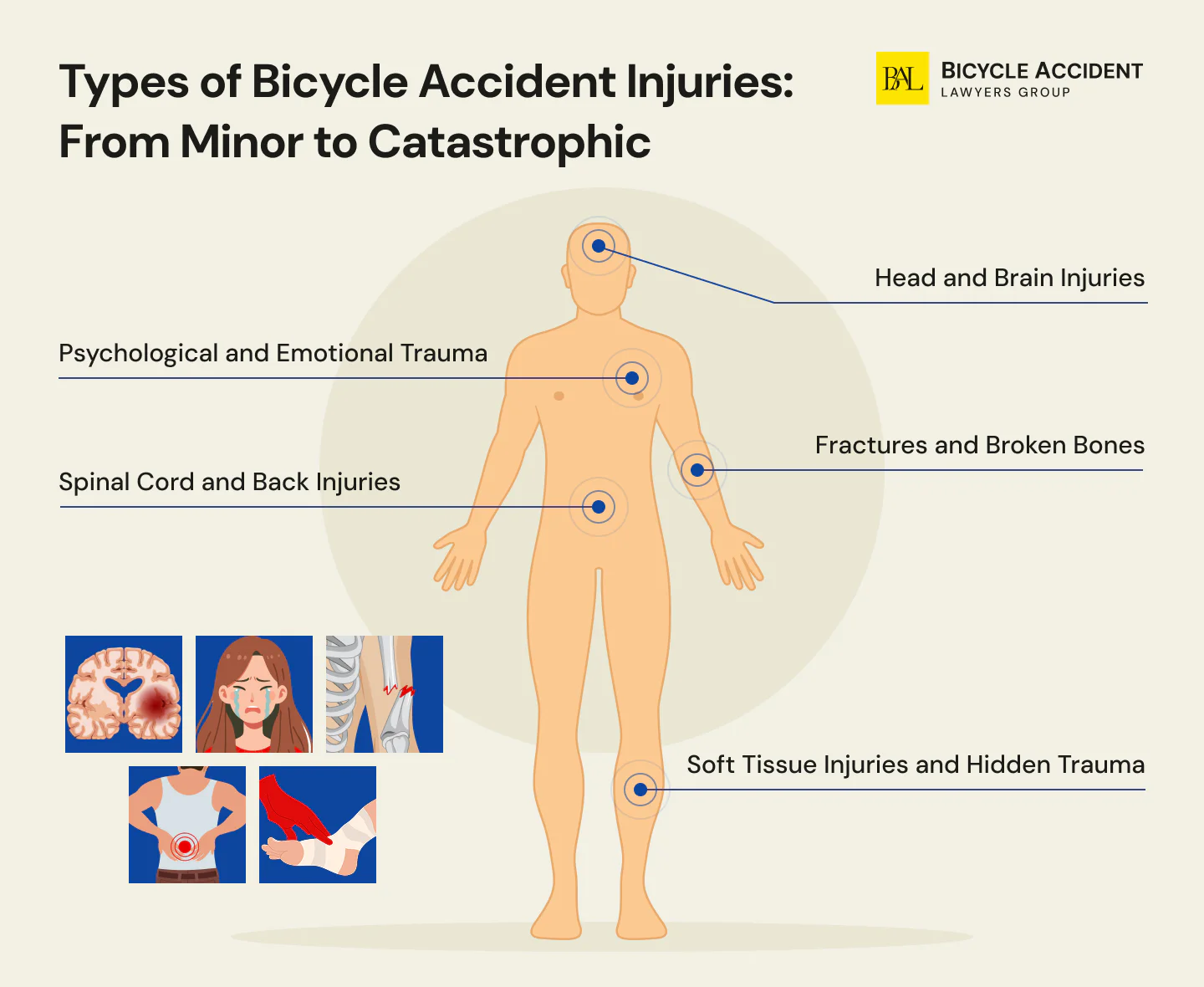
Minor Injuries (Quick Recovery Expected)
Minor injuries can range from road rash to bruising, contusions, sprains, strains, and superficial cuts. These traumas do not usually cause significant discomfort. However, there is room for more serious consequences if you leave them untreated. For example, they can get infected and take longer to heal.
Moderate Injuries (Weeks to Months’ Recovery)
Moderate cycling accident traumas like fractures, torn ligaments, and dislocations can disrupt your routine. However, even though you may need a few weeks off work, bones broken after bicycle accidents heal without complications in 4-12 weeks. Of course, in more difficult cases, even moderate-severity traumas can require surgeries, not to mention that shoulder or hip dislocations can result in chronic pain.
Severe Injuries (Permanent Impact)
It might take months or years for victims of severe traumatic brain injuries, paralysis, or limb loss to recover, frequently with little progress. Not to mention that instances of internal organ damage can lead to deadly effects. In such a circumstance, a wounded cyclist is unlikely to return back to their prior life, which means that accompanying physical trauma, there comes considerable emotional distress, loss of income, and a lower quality of life.
Factors That Determine Injury Severity
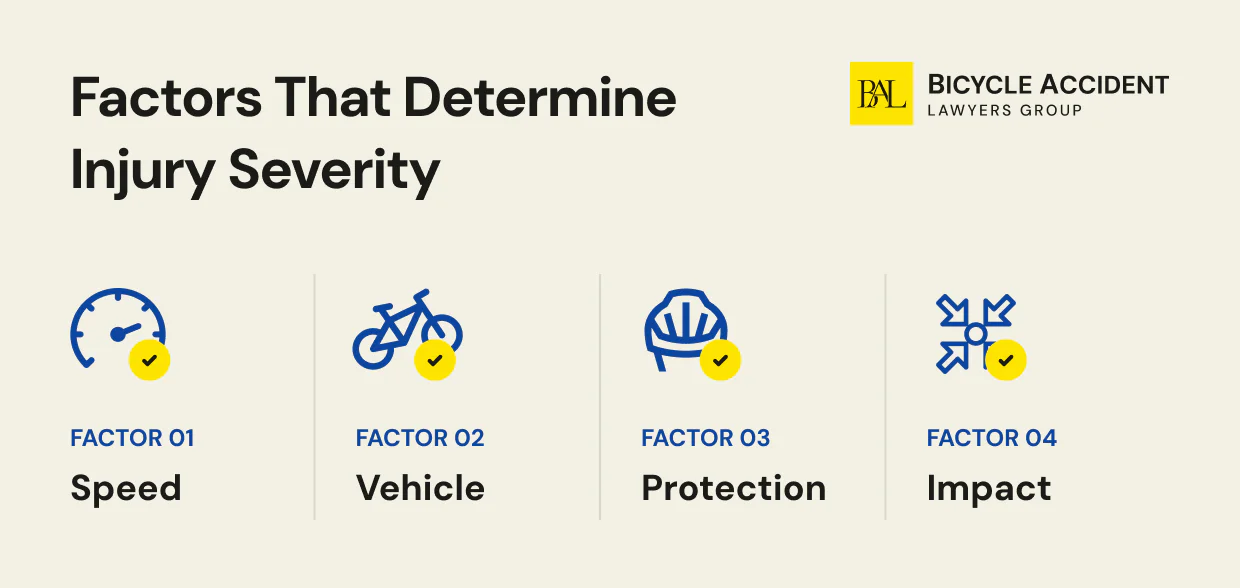
Among the main factors that have a direct impact on the physical outcomes of the collisions are:
- Speed: The faster both parties move, the harder the hit that your body takes.
- Vehicle: A collision with another bicycle will leave you less injured than an accident with a commercial truck.
- Protection: Your safety will improve if you wear protective gear, such as a helmet and knee and elbow pads.
- Impact: The higher the speed, the stronger the impact, and the more severe the injuries can be.
Additional factors and preexisting conditions can also affect the severity of the injuries. That is why a similar accident can cause different outcomes.
Head and Brain Injuries
Bicycle crash head injuries are the most common trauma riders get, yet it remains among the most commonly missed injuries. All because many people assume that as long as they did not hit their head hard or did not black out after a crash, they do not have a bike accident brain injury.
However, even with a protective helmet, the force of the accident could have caused the brain to move inside the skull. Even a slight movement can become a solid foundation for serious conditions such as a varying-scale cycling concussion and a more serious TBI from a bicycle accident.
Concussions and Mild TBIs
A concussion is a direct outcome of your brain jostling inside the skull. Usually, a mild TBI from a bicycle crash passes in a few days. However, it may last for a couple of weeks.
The most typical cycling concussion symptoms include:
- Headache
- Dizziness
- Confusion
- Nausea
- Memory problems
Note: You can have a concussion without losing consciousness, although some severe cases do involve passing out.
Severe Traumatic Brain Injuries
A major brain or head injury from a bicycle incident can involve damage to both the brain tissue and the skull. Victims often have brain swelling, hemorrhage, or skull fractures. Some riders never fully recover from a serious traumatic brain injury (TBI), and recovery can take months or even years. These injuries have the potential to significantly alter a person’s way of thinking, controlling their emotions, and performing daily tasks.
Warning Signs That Appear Later
Some people may not know that TBI symptoms can appear days after the crash. After a lucid interval, the victim can experience delayed symptoms, such as worsening headaches, vomiting, speech trouble, balance changes, and other behavioral changes. Those who notice such symptom progression should seek medical assistance immediately.
Spinal Cord and Back Injuries
One of the major myths revolving around back trauma is that it leads to immediate paralysis. However, while a serious bicycle accident can lead to such an outcome, other spinal cord injuries after bicycle accidents can also bring you serious discomfort. Disk injuries, fractured bones, and damaged nerve roots can be as serious if they are not detected on time.
Vertebrae and Disc Injuries
Bones and joints that protect your spine can crack or dislocate as a result of the collision. This type of trauma is referred to as a vertebral injury from a bike accident. Its main danger lies in the fact that it can be easily mistaken for mere soreness after the crash. Yet, it is best to get checked out the moment you start to feel either constant or occasional discomfort.
Cyclists may also suffer from common bicycle accident injuries, such as herniated discs. A bulging or ruptured disc often presses on the nerves and causes sharp pain in the back or pain that travels down an arm or leg.
Spinal Cord Damage and Paralysis Risk
In some cases, a spine injury after a bicycle accident is not to the bones supporting it, but rather to the cord itself. This type of trauma increases the risk of paralysis. For example, some riders suffer from cycling accident quadriplegia, which means the loss of movement in the upper and lower extremities. Others may experience a condition called paraplegia, which affects their legs.
How to Recognize Spinal Injury Symptoms
Despite the seriousness of the condition, a spinal cord injury is easy to miss if you do not know the signs of back trauma after a cycling crash to look out for. The warning signs include, but are not limited to:
- Numbness or tingling in the extremities
- Neck stiffness
- Loss of bladder control
- Weakness in arms or legs
Even if you have one of these symptoms, it is best to schedule a visit to your doctor as soon as possible.
Fractures and Broken Bones
When a cyclist is thrown off a bike, they instinctively extend their arms, use a shoulder to soften the fall, or let the side take most of the impact. Because of this instinct, the following fractures are among the most common bike crash injuries:
- Collarbone fracture
- Wrist fracture
- Rib fractures
- Pelvic fracture
When you break a bone in an accident, the recovery may take from a few weeks to several months. While the fracture location matters, its severity determines the healing time.If it is a simple fracture, the bone cracks but usually stays aligned, which means the recovery may take from four to eight weeks.
However, complex fractures mean the bone shifts or breaks into pieces. Compound fractures often require reconstructive surgeries, thus the recovery time expands from three to six months or even longer.
Soft Tissue Injuries and Hidden Trauma
Invisible cycling accident trauma is usually the most painful and dangerous kind. When a rider checks for broken bones and finds none, it does not automatically mean they are in the clear. Often, serious soft-tissue and many internal injuries can be missed in the first moments after a crash.
Road Rash
Road rash may be the least life-threatening injury of all. Usually, it is a direct outcome of a cyclist sliding on the ground, especially on pavement or gravel, which can graze the skin.
At first glance, a scraped elbow is just that — a mere skin abrasion. However, as dirt and debris get into the wound, it may become seriously infected. This, in turn, can lead to a longer healing time and even permanent scarring. To avoid that, you should clean your wound and provide proper care even for the simplest friction burn.
Muscle, Tendon, and Ligament Injuries
When you fall, your body can twist unnaturally, which means your muscles can strain and ligaments can sprain. In the worst cases, both can tear. Either of these conditions leads to stiffness and pain that can last for days if not weeks.
The tricky part is that you can walk away from the scene of the accident with, for example, a whiplash injury without suspecting that something is wrong, only to wake up the next morning with severe neck pain. While common bicycle accident injuries like sprains and strains often heal on their own, they may take time, and a doctor could suggest physical therapy or other helpful treatments to speed up the process.
Hidden Danger of Internal Injuries
A hard impact can sometimes cause serious internal organ damage. Internal bleeding, spleen rupture, kidney trauma, and other abdominal trauma usually do not present themselves visually. Yet, if untreated in the first hours after the crash, internal injuries can even lead to wrongful death in bicycle accidents. That is why it is important to closely monitor your condition. If you start to feel dizzy, have stomach pain, or suddenly feel short of breath, it is best to rush to the ER immediately.
Psychological and Emotional Trauma
After a person gets into an accident, physical injuries can be accompanied by emotional trauma. Many cyclists experience clear PTSD symptoms that can include:
- Flashbacks
- Nightmares
- Heightened anxiety
These reactions can appear days or weeks after the crash. Yet, no matter when they begin, they tend to have a significant impact on the rider’s life. Some bicyclists are afraid of getting back on their bikes. Others feel nervous around traffic in general or near certain locations. On top of that, accident victims can become irritable, depressed, or unfocused. This also has a direct impact on their everyday life and on those close to them.
Psychological injuries are real and can be treated. Therapy and counseling are among the most effective methods that can help you deal with the non-physical consequences of a crash.
Delayed Symptoms — When Injuries Appear Later
Even the most common bicycle accident injuries may not present themselves right after the crash. All because the rush of adrenaline, along with the general shock of the situation, can mask even some of the most serious conditions.
It may take from a few hours to several days for some traumas to reveal themselves. That is why it is so vital to listen to your body in the first 48-72 hours after the crash. Do not look for something grand. Sometimes, all it takes is a headache that does not go away, feeling light-headed when you stand up, belly pain, or a sore neck to signal serious injuries.
When your body tells you that there’s something potentially wrong, you should not try to wait these symptoms out. If you listen and act early, you may avoid bigger problems later.
What to Do After a Bicycle Accident?
A bicycle accident can shake you badly, to the point that you miss critical injuries and feel confused and unable to act logically. That is why it is important to memorize five basic, but essential steps:
- Seek safety
- Notify emergency services
- Document the scene
- Get examined by a doctor
- Consult a lawyer
The first two are quite self-explanatory — you need to get away from a busy part of the road to avoid additional injuries and call 911 so the medics and the police can arrive at the scene. The next steps you take, if your condition allows it, will lay the foundation for your future accident claim.
The most important evidence can be collected at the scene, including witness accounts, police reports, and digital documentation of how the incident occurred. In addition to ensuring that you have no concealed injuries from the bike mishap, a prompt hospital appointment will establish formal medical records that link your traumas to the collision.
Last but not least, even a quick consultation with a lawyer can help you comprehend your legal situation and steer clear of blunders that might cost you future recompense.
Consult an Experienced Bicycle Accident Lawyer
Bike crash injuries can turn your life upside down. Whether you are dealing with such severe physical conditions as complicated fractures, spinal cord damage, and traumatic brain injuries after a bicycle accident, or struggling with severe mental distress caused by the crash, you have a legal right to pursue fair compensation.
However, complicated labyrinths of insurance plans and legal-system flaws may stand between you and rightful compensation. An experienced attorney can then intervene and relieve you of the majority of your worries. While you concentrate on getting better, our legal team will look into the collision, gather evidence, deal with the insurance provider, and defend your rights in court.
We do not charge our clients upfront service fees because we know the financial toll an accident can take. Our attorneys work on a contingency-fee basis, which means you pay only if we win. Reach out to us for a professional and free case review.

Since his academic days at the UC Berkeley School of Law, Robert Goldwater has remained a committed advocate for victims of other people’s negligence. His tort law background, together with his unquenchable thirst for justice, helped young Robert found a now-successful law firm – Bicycle Accident Lawyers Group, gathering same-minded and promising attorneys from all over the country.