

A broken bone changes what your injury claim is worth, because surgery, hardware, and months off the bike all become damages an insurer has to pay for. Our attorneys build fracture cases around the medical record, not the adjuster’s first offer.

Meet our Team
Meet Our Broken Bones Bicycle Accident Lawyers
Fracture claims turn on medical evidence most personal injury lawyers never think to request, including the operative report, the hardware implanted, and the surgeon’s note on permanent restriction. Our team reads those records the way a defense adjuster will, then documents what is missing. We work bicycle cases specifically, so we know how insurers price a cyclist’s injury, and the consultation is free.
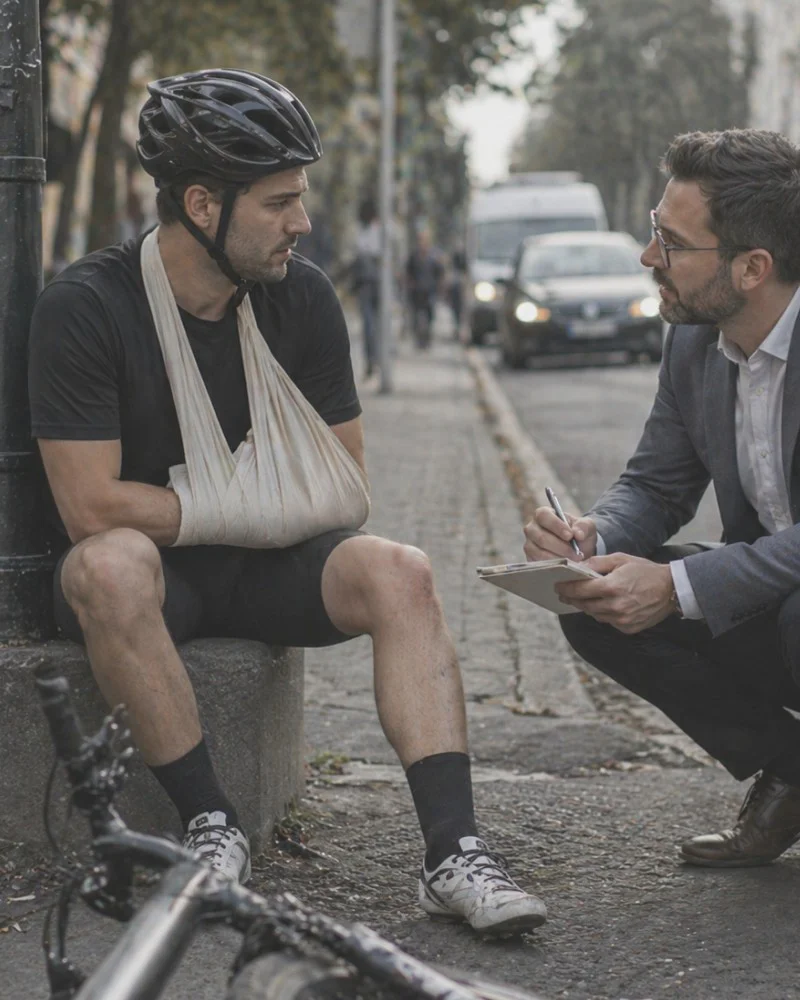
injuries
What Are the Most Common Broken Bone Injuries in Bicycle Accidents?
Bicycles are the single most common cause of broken collarbones treated in US emergency rooms. Across national emergency room injury data, bicycles accounted for 15.1% of clavicle fractures, ahead of football at 10.7%. The mechanism is consistent, because a rider going over the handlebars lands on an outstretched hand or a shoulder, so the collarbone, wrist, and forearm absorb the impact first. E-bike riders are a fast-growing share, and nearly one in four of those crashes involved a motor vehicle.
Collarbone (clavicle) fractures
Clavicle fractures happen when a rider goes over the handlebars onto the shoulder. A simple break is treated in a sling, while displaced ends require plates and screws. Healing takes several months, and most riders are back to normal activity near the three-month mark.
Wrist and hand fractures
The distal radius is the classic bicycle wrist fracture, and one in six broken bones treated in US emergency rooms is one. Displaced breaks require surgery, and while the cast comes off in four to six weeks, full recovery can take a year.
Arm breaks (humerus, ulna, radius)
A hard landing can break the humerus, radius, or ulna, and adults often break both forearm bones at once. One undisplaced bone can be set in a cast, while both-bone and open breaks get plates and screws, with full healing at three to six months.
Leg breaks (femur, tibia, fibula)
The femur is the strongest bone in the body, and a motor vehicle crash is the most common way it breaks. Surgery is almost universal, usually a rod down the center of the bone, and complete healing takes three to six months.
Hip and pelvis fractures
A pelvic fracture is the one we worry about most, because a high-energy pelvic break can be life threatening. Stable breaks heal on crutches over about three months, unstable ones require external fixation or plates, and muscle strength can take a year.
Ready to Get Started?
Find out what your fracture claim is actually worth before an adjuster tells you. Start your free case evaluation now.
Types
Types of Bone Fractures
The fracture type recorded in your chart drives treatment and value:
- Closed (simple) fractures, treated with a cast.
- Open (compound) fractures, needing emergency surgery.
- Displaced fractures, needing plates and screws.
- Comminuted fractures, where bone shatters into three or more pieces.
- Non-displaced fractures, easily missed on a first X-ray.
- Greenstick fractures, which bend rather than snap, in young riders.
Cyclists involved in high-speed collisions face the highest risk of comminuted and compound fractures.
Insurers price the words on your radiology report, not the pain you describe.
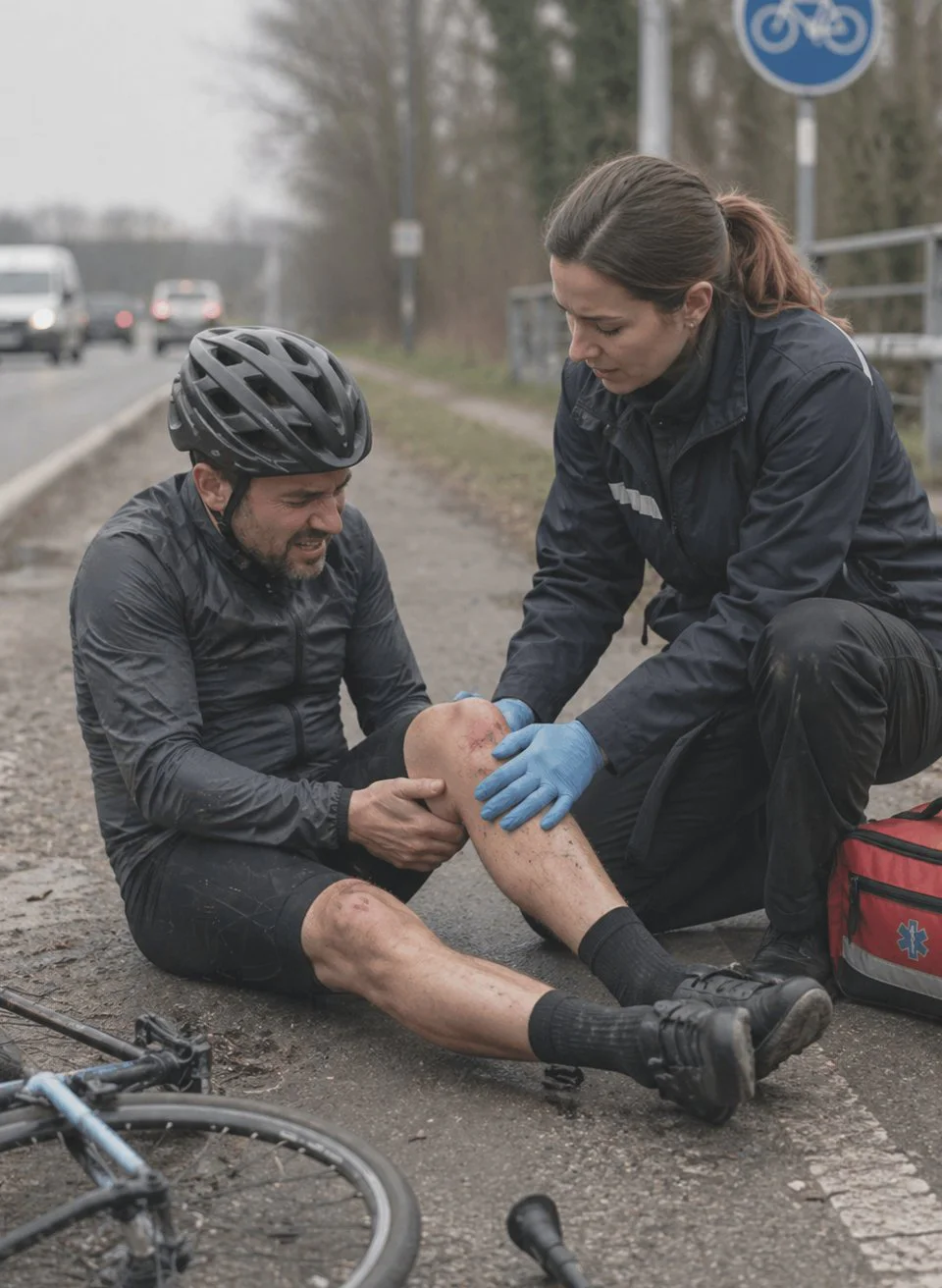
What
What Types of Bicycle Accidents Cause Broken Bone Traumas?
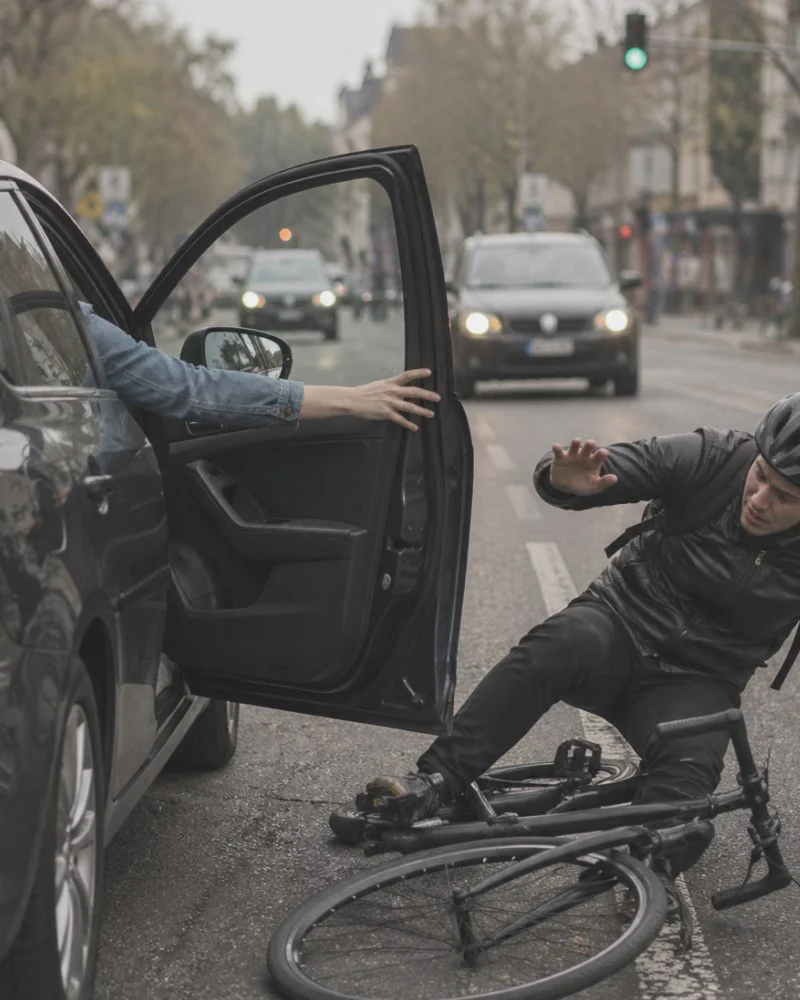
Fracture patterns follow crash patterns, so the collision type in the police report often predicts which bone broke. A dooring throws you into the door edge or the traffic lane, while a right hook takes the front wheel out at an intersection.
Types of Bicycle Accidents That Cause Broken Bones
- Dooring accidents occur when a driver opens their car door into a cyclist’s path.
- Opening car doors carelessly is a common bicycle accident cause.
- Cross collisions happen when drivers turn without looking.
- Rear-end impacts involve distracted driving, motorists hitting cyclists from behind, and these can escalate into fatal bicycle crashes.
- Intersection crashes occur when drivers disregard traffic laws.
- Sideswipe accidents take place when cars pass too closely or merge into bike lanes, often due to careless driving.
- Parked cars can also obstruct a cyclist’s visibility.
Road hazards like potholes, cracked pavement, or unmarked road work also cause serious injuries. Bicycle crashes on poorly maintained roads are among the most common causes of fractures, and cyclists who suffer road rash alongside fractures face higher medical bills.
Steps to take after a bicycle accident
What to Do If You Break a Bone in a Cycling Accident
The actions you take after a bicycle accident take on critical importance. Follow these steps:
Seek medical attention right away
A scaphoid fracture can be invisible on a first X-ray, and treatment gaps are the first thing an adjuster attacks.
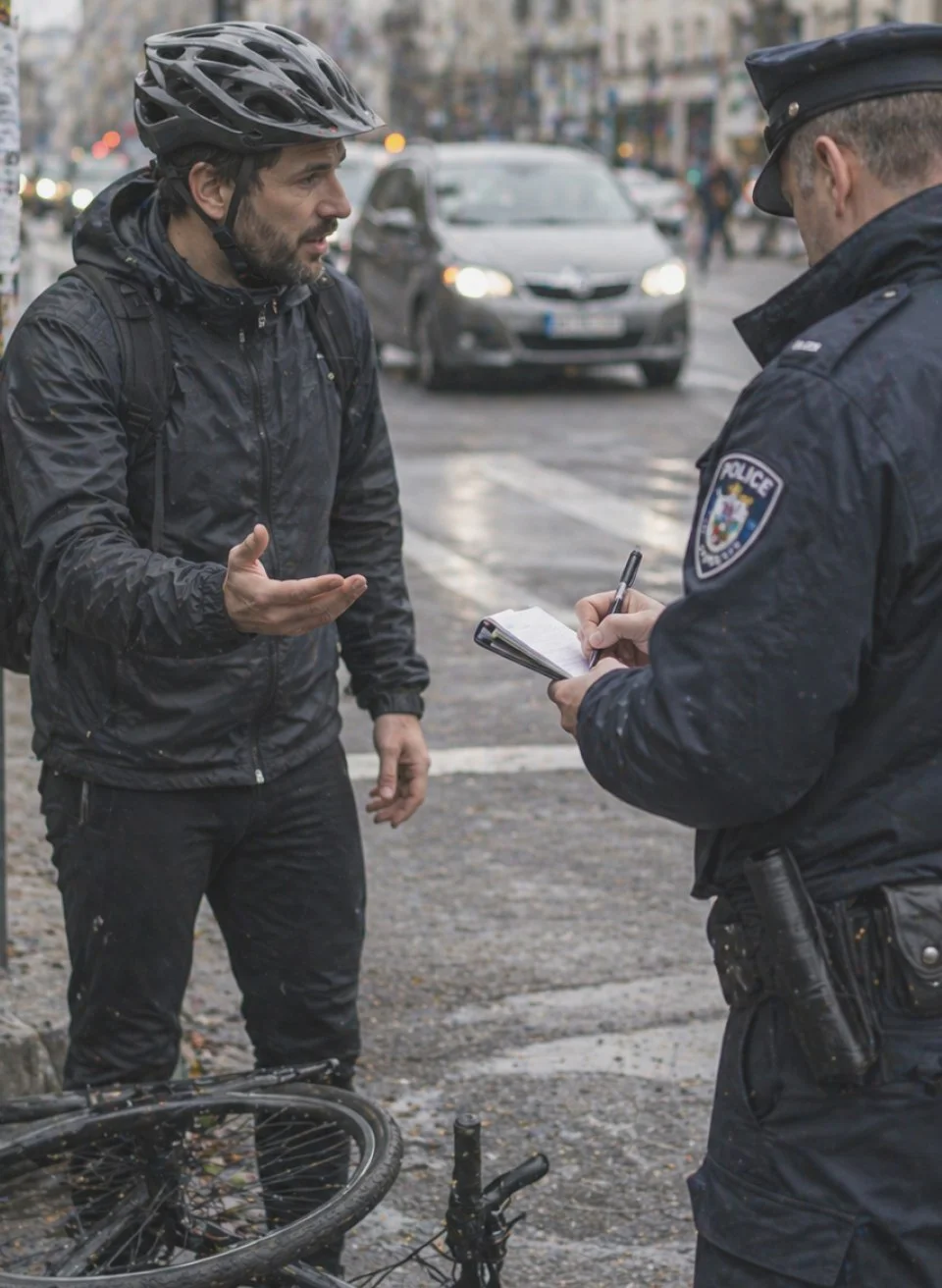
Call 911 and file a police report
The report fixes the driver’s identity, the insurer, and the location before anyone’s memory changes.
Document the accident scene
Photograph the bike, your injuries, the vehicle’s position, and the road surface. Bent components and a cracked helmet show impact force, which is the evidence that separates a serious fracture claim from a soft-tissue one.
Preserve physical evidence
Keep the damaged bike, helmet, and gear exactly as they are. Repairing or discarding them destroys the best proof of force.
Do not speak to insurers before talking to a lawyer.
Never admit fault at the scene. A recorded statement given on pain medication becomes the version of events the insurer quotes back all year.
Contact an experienced bicycle accident attorney
Surveillance footage from nearby businesses is often overwritten within weeks, and an attorney can demand it in time.
Who Is Liable
Who Is Liable for a Bone Broken in a Cycling Accident?
Liability attaches to whoever failed, whether or not they were driving. A driver who turns across a bike lane, a city that leaves a pavement defect unrepaired after notice, and a manufacturer whose fork fails under normal load can all be held liable in different ways. Which one applies changes the deadline, the evidence, and often the compensation available.
Example of at-fault parties:
- Car driver
- Another cyclist
- Pedestrian
- Government
- Bicycle or parts manufacturer
More than one liable party usually helps you, because a second policy means a second source of money when the driver’s limits are too low.

How
How Negligence Is Proven in a Bicycle Accident Case
You must prove four elements, and they are duty, breach, causation, and damages. Every driver owes cyclists a duty to share the road, so the fight is usually over breach and fault share. If you were partly at fault, most states use comparative negligence and cut your recovery by your share, while Alabama, Maryland, North Carolina, and Virginia bar it over any fault at all. The District of Columbia carved cyclists out, and under D.C. Code 50-2204.52 a vulnerable user only loses if more than half the fault is theirs. Maryland has tried the same fix twice and failed.
Recoverable Damages
What Damages Can Be Recovered in the Broken Bone Bicycle Accident?
Every fracture case is different, but your attorney will pursue compensation across three categories: economic damages, non-economic damages, and in rare cases, punitive damages. The value of a broken bone claim depends on whether surgery was required, how long recovery takes, and whether the injury causes any permanent limitation.
Economic Damages
Economic damages include medical expenses (emergency care, surgery, rehabilitation, and hardware such as plates, screws, or external fixation devices), lost wages and lost income during recovery, reduced earning capacity if the fracture limits your ability to work, and property damage to your bicycle and personal items. These documented financial losses form the foundation of your claim.
Non-Economic Damages
Non-economic damages cover pain and suffering, emotional distress, loss of enjoyment of life, and disfigurement. A fracture that leaves visible surgical scars or hardware under the skin can support a disfigurement claim. Cyclists who also suffer road rash face additional non-economic losses. Many bicycle accident victims underestimate what they can recover for these damages.
Punitive Damages
In rare cases involving extreme recklessness, the court may award punitive damages to punish the at-fault party.
Filing your claim
How to File a Broken Bone Bicycle Accident Claim
Filing a personal injury claim involves several key stages. Understanding this legal process helps you know why having a bicycle accident attorney matters at every step.
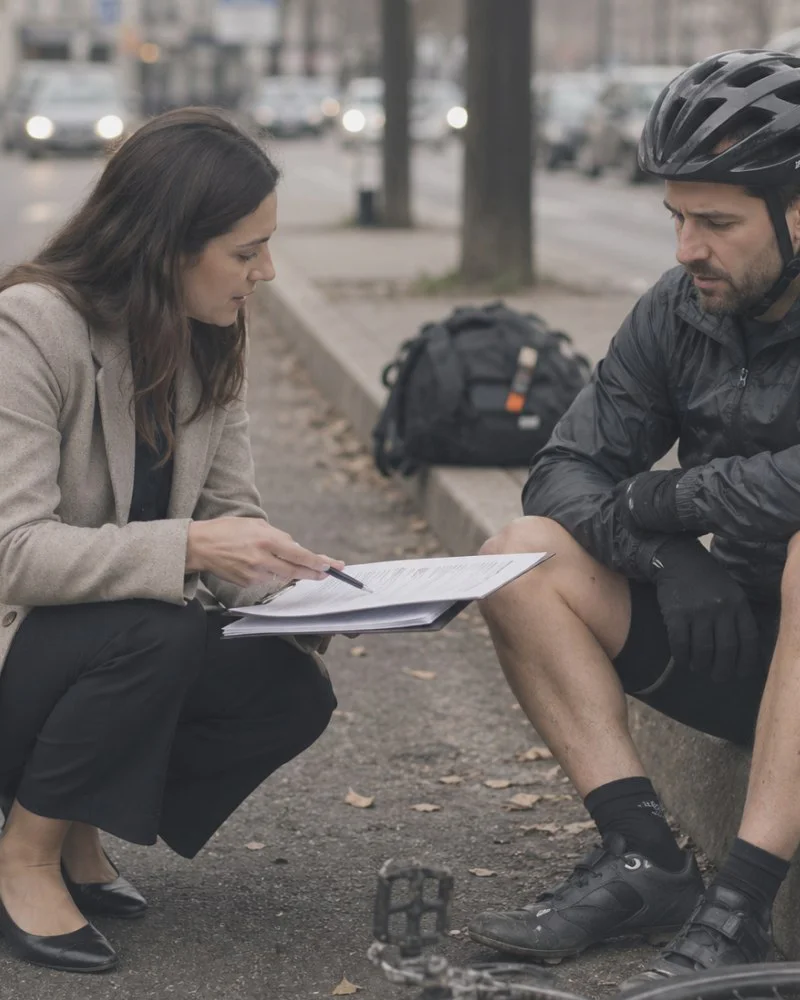
First, consult with a bicycle accident lawyer during a free consultation. We offer services at no upfront cost. They will then gather evidence from witnesses, medical records, the police report, and surveillance footage.
Your lawyer will send a demand letter to the at-fault party’s insurance company and negotiate a fair settlement. If the insurance company refuses to offer fair compensation, the attorney will file a lawsuit in court. Filing a lawsuit sends a clear message that you are serious about full compensation.
Don’t Wait Too Long to File Your Claim
Every state sets its own deadline for filing a lawsuit. California, Illinois, and most states allow two years from the date of the accident. Some states give you three years, while Kentucky and Louisiana allow only one. Claims against a government entity, such as a city that left a road defect unrepaired, often require a notice of claim within 90 to 180 days. Missing any of these deadlines can bar your claim entirely, regardless of how serious the fracture was.
Why
Why Should You Hire a Bicycle Accidents Lawyer for Your Case?
A fracture claim lives and dies on medical documentation. The operative report, the implant record, and the surgeon’s note on permanent restriction are the three documents that set the value of your case. Most cyclists never request them, and most general-practice attorneys do not know to ask for them.
An insurer’s first offer on a broken bone is based on the diagnosis code alone, a closed clavicle fracture, for example, without accounting for the hardware implanted, the weeks of physical therapy, or the surgeon’s opinion that the shoulder will never return to full overhead strength. A bicycle accident attorney who handles fracture cases gets that opinion in writing before the demand letter goes out.
Bicycle fracture claims also involve evidence that disappears quickly. Surveillance footage from nearby businesses is typically overwritten within 14 to 30 days. The damaged bike and helmet show the force of impact, and once repaired or discarded, that proof is gone. A lawyer can send a spoliation letter to preserve this evidence before it is lost.
Finally, a second liable party often exists. The driver’s policy may have low limits, but the city, a vehicle manufacturer, or an underinsured motorist policy can provide additional recovery. Identifying every available source of compensation early is one of the most important things a bicycle accident attorney does.
Settlements
Our Settlements
Our attorneys hold negligent parties accountable and ensure accident victims receive the compensation they deserve. Our clients trust us because we consistently deliver results in bike accident cases and broader personal injury claims. We also help injured cyclists understand what may affect their case value, including how their losses compare to the average bicycle accident settlement by state.
How to
How to Choose a Bicycle Accident Lawyer
Ask one question before you sign anything: how many bicycle cases has this firm taken to trial? Bike claims turn on facts that car-crash practices rarely encounter.
Their answer should cover the right-of-way rule for bike lanes where you ride, how your state treats a helmet, and whether local police tend to code cyclist crashes accurately.
Most states give cyclists the same rights and duties as drivers, which is the foundation of every fault argument in a bike case. The exceptions matter locally, though, because bike lane rules, sidewalk riding, and stop sign treatment vary by city as well as by statute.
Read the firm’s actual bicycle content. If it never names a statute or a bike lane rule, that tells you something.
no need to wait!
Contact Our Broken Bones Lawyers for a Free Consultation!
Bicycle Accident Lawyers Group handles broken bone cases for injured cyclists. Bring us the X-ray, the police report, and whatever the insurer has already said, and we will tell you what the claim looks like and what the deadline is in your state. The consultation is free, and you pay nothing unless we win.

Get a FREE case evaluation today
If you’re a cyclist who has been in an accident, call today for a free initial consult about your legal claim. We’re here to help with your legal questions. Contact our law firm for coast-to-coast bike accident and personal injury representation.
Call us now at:
888-521-6377

Latest update:
