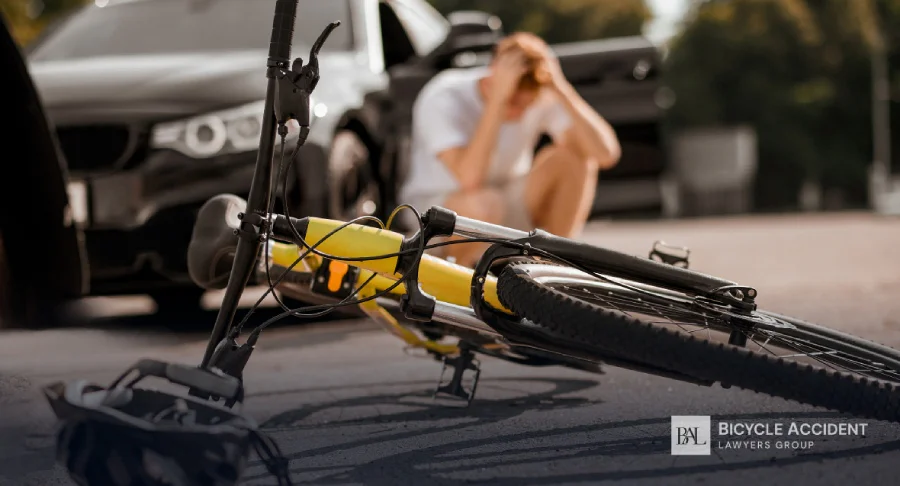

Texas bicycle laws define bicycles as vehicles under Texas Transportation Code §551.101. This means that cyclists have the same rights and duties as drivers. However, the state’s roads tell another story, which means that knowing these rules can literally be a matter of life and death.
Cyclists have the legal right to be on the road, yet too often they’re treated as obstacles rather than equals. This guide breaks down your rights, responsibilities, and what to do when drivers don’t play by the rules — backed by the exact laws that protect you.
Why work with us:
- Expert legal assistance
- Free case review
- Millions recovered in compensation
Call us or fill out the form — everyone deserves professional protection.
What Traffic Laws Apply to Cyclists in Texas?
Bicyclists are viewed as drivers by Texas statutes, which means that they have to follow all major rules of the road. However, this doesn’t mean that the rules are identical. There are cyclist-specific sections in the Code, too. They define how and where you can ride, signal, or share the road.
Key Texas bicycle laws:
- §551.101 — Main rights and duties of a rider
- §551.103 — Where and how bicyclists should cycle in the state
- §545.107 — Signs to warn other road users about the change of direction
- §545.053 — Safe distance rules applicable to cyclists
- §545.4251 — Use of devices while on the road
- §551.104 — Proper equipment required to cycle legally in Texas
The state-approved regulations ensure that riders remain more predictable on the road, while cyclists’ rights grant them valid legal protection. Care to learn more about what rights an average bicyclist has under Texas law?
What Rights Do Cyclists Have Under Texas Law?
Bicyclists in Texas have a legal right to share the road with other users. They can access public roads and be treated like equals. The general rule of thumb is to obey all signs and signals on the road. However, the rider’s safety often comes first. If following traffic rules poses an immediate threat, a cyclist can disregard them, potentially without legal consequences.
There’s one more important right that bicyclists have under the Texas Code — to wear or not to wear a helmet. While it is a given that every individual makes this choice, our practice shows that choosing the former may save your life.
Now, it is time to learn how the major bicycle laws play out in real life.
Cyclists Can Use Public Roads
You can ride anywhere in Texas. Well, almost anywhere. Limited-access or controlled-access highways are usually off-limits to bicyclists in Texas (§545.065). These roads are known for high speeds and limited visibility; both can put a vulnerable road user in serious danger.
All public roads across the state can be shared with other motorists (§ 551.103). Keep in mind, drivers don’t have the right to push you off your lane — you share the same right to it under the state code.
Right to Full Lane Use
The Texas code states that a rider has to keep to the right side of the road when sharing the lane with other vehicles. However, things change when you are about to make a turn or when cycling close to the right side poses a threat to your safety.
Sometimes there are parked cars on the side; in other instances, there may be piles of debris, potholes, and other obstacles. That is where you can move to the center and take the whole lane. You are not acting illegally. The laws are imposed to protect you, and biking safely resonates with the goal.
Right-of-Way in Crosswalks and Bike Lanes
Bicyclists in Texas have the same rights as motor vehicle operators, which means they have to abide by the general yield laws. Riders do not have the same right-of-way as pedestrians. However, whenever you cycle in a bike lane, you have the right of way, since the Code forbids driving in a dedicated bike path (§ 545.422).
There aren’t precise exceptions that concern crosswalks, but in Dallas, local authorities recommend installing special “yield to bike” signs in zones prone to accidents that involve bicycles.
Safe Passing
Texas is one of those states that hasn’t passed the safe-passing law yet. In many states across the country, drivers have to grant riders as much as 3 or 4 feet of safe space when overtaking them.
In the Texas code, the exact safe distance range isn’t specified, but it is said that all motorists must give other road users enough room to operate safely (§ 545.053). Should a driver disregard the requirement, they will face up to a $200 fine or 30 days in county jail. Occasionally, both punishments may apply (§ 545.401).
Other Cyclist Rights
Most statewide cyclists’ rights are similar to those approved all over the US. However, you can ride on the left side in Texas. While this exception applies only to one-way roads, you need to know your rights in case of an emergency. So, if you assume that riding on the right puts you at risk because of whatever hazards are on the road, you can move to the left lane and legally continue the route (§551.103(b)).
Cyclists Have the Same Rights as Motorists in Texas
The rights that bicyclists have go beyond equal use of the road in Texas. All riders in the state are entitled to file accident claims in case of a crash, negotiate their compensation with insurance adjusters, and even take the case to court if they don’t arrive at a plausible resolution.
When you know your rights, you can defend your lane position or explain the right-of-way law to other, potentially negligent parties. However, professional legal assistance still comes in handy, since most cases involve shared liability and other nuances that can push you off course. So, don’t hesitate to contact a lawyer to protect your rights as a cyclist and make sure you are treated fairly.
What Responsibilities Do Cyclists Have Under Texas Law?
You can’t expect others to respect you on the road when you are riding erratically with complete disregard for the rest of the traffic participants, can you? On top of every right, there comes a responsibility. In the case of cycling, the major duties often include following traffic rules, communicating with motorists, and riding a functional vehicle.
Disclaimer: Irresponsible biking goes hand-in-hand with serious legal consequences. Use this information to avoid risky situations. Yet, if you get in a collision, always consult an experienced legal assistant to know where you stand.
Obey Traffic Signals and Signs
Many bicyclists in Texas follow traffic signs and lights most of the time. However, running a red light or rushing past a stop sign has happened to everyone at least once. If you haven’t acted on this urge, good for you.
The fact is that sometimes a car may roll around the corner, or a pedestrian may choose to cross in front of you, assuming that you respect the rules, and you’ll end up without enough time to prevent a collision. It isn’t an exaggeration that a few extra seconds at a light can make all the difference between a safe ride and an emergency room visit.
Ride With the Flow of Traffic
Some of you may think, “What does it matter to bike against the flow if I stick to the right side?” There are three major pillars that the answer to this question relies on:
- Predictability: When you move in the expected direction, other road users can see you in time, give you enough space, and anticipate your maneuvers.
- Legality: The law clearly states how you must ride. Any other take on the activity will make you partially liable in case of an accident, no matter what other underlying conditions.
- Practicality: If you cycle in a legal manner, you’ll avoid the unnecessary stress related to how you should cross intersections, yield, and move around obstacles and hazards on the road.
It is an unbreakable rule to ride in the direction of traffic, and now you know why.
Use Hand Signals When Turning or Stopping
One of a cyclist’s vital responsibilities is to warn others about the upcoming maneuver. Since bicycles aren’t equipped with corresponding stop or turn lights, you must use your hands for the purpose (§ 545.107). The hand signals are easy to memorize because they are simple and few in number. For instance:
- Extend your left arm horizontally to communicate an upcoming left turn.
- Extend your right arm horizontally to notify of a right turn.
- You can use your left arm to turn right, too. Bend your left arm at 90 degrees and point it up.
- Extend the left arm down to signal that you are stopping or slowing down.
A hand signal is a small gesture that makes a big difference between a safe ride and a serious crash.
Yield to Pedestrians
Pedestrians come first (§ 552.008). That is an important rule every rider must memorize. That is why whenever you see a pedestrian heading in the same direction as you, you should slow down and let them pass, especially at an intersection or crosswalk.
Both bicyclists and pedestrians are often referred to as vulnerable road user groups, which they are, as opposed to motor vehicle operators. However, a pedestrian is the most susceptible to injury of the two. Obviously, they lack protection. Moreover, they may not see or hear a rider approaching. If you show a little respect and patience, you will not only avoid a potential collision but will also reinforce the positive image of a modern-day bicyclist.
Ride no More Than Two Abreast
Riding two abreast simply means that you can enjoy the ride with a friend or a partner without unpleasant legal consequences (§551.103(c)). However, a few minor conditions still exist. First of all, your friendly ride should not interfere with the flow of traffic. Secondly, both of you should remain within the same lane.
What if you want to ride three or more abreast? Speaking about shared lanes — you aren’t allowed to cycle in threes. However, if you are biking in a dedicated lane and its width suffices for the purpose, why not?
Use a Fixed Seat and Proper Equipment
You wouldn’t drive a car without brakes, lights, or other essential equipment, would you? Riding a bike isn’t much different in that regard. Moreover, it is strictly forbidden by Texas code to cycle without brakes that make at least one wheel leave skid marks on dry pavement. The same goes for vehicles missing front white lights visible from 500 feet and rear red lights or reflectors visible from 300-foot range.
Thinking about giving a friend a ride home? It seems like a commendable gesture. However, if your bicycle isn’t equipped with a passenger seat, it is illegal under state law. Furthermore, no rider is allowed to cycle on a frame or handlebars, only on the fixed seat.
Maintain at Least One Hand on Handlebars
Modern life is all about multitasking. Can you sip your morning coffee while biking to work? Yes, you can, as long as one hand remains in full control of the vehicle. Anything that requires you to take both of your hands off the handlebars is forbidden by law (§551.102(c)).
The state authorities do not doubt your riding skills. It is just the fact that a fleeting moment can turn your life upside down. Whether it is a car door in your way or a pothole under the wheels, you may not be able to react in time to avoid danger with both of your hands occupied with anything else but the handlebars.
Where Can I Ride My Bike in Texas?
Texas is a land of freedom for bicyclists. The state grants riders all the rights of other motorists, so you can access most public roads and cycle as equals. The sole exceptions are limited-access roads. There may be restrictions on the rider’s position in the lane, as they are primarily expected to ride as close to the right edge of the lane as possible. However, if that seems dangerous, the law allows you to occupy the whole lane.
On top of that, you can also bike in bike lanes, which are inaccessible to drivers. As for sidewalks in Texas, there aren’t relevant statewide regulations to cite. The final decision is up to local authorities. That is why, if you are new to the area, consult the municipality codes on sidewalk riding first.
What Traffic Laws Apply to Cyclists in Texas?
All traffic rules apply to riders in Texas. Isn’t this a little overzealous, considering that bikes can’t match even the smallest of motor vehicles? Not in the least.
When every road user plays by the rules, traffic becomes predictable, so you can get wherever you are headed in one piece. If you cycle with the flow, you automatically decrease the chance of a head-on collision. At the same time, whenever you take over the lane, the driver notices you, ensuring that you finish that left turn safely.
Subtler rules matter too. A few seconds spent signaling the turn, or one ear uncovered by headphones, can prevent a serious accident caused by surprise or a slower reaction.
Required Bicycle Equipment and Safety Gear in Texas
Is every bicycle gear legal in Texas? It depends. The state has a list of bicycle equipment that makes a vehicle not only rideable but also safe on the road. These requirements concern the brakes, lights, and headgear (§ 551.104).
Without strong brakes, you won’t be able to halt the bike on time to avoid a dangerous situation. That is why state laws mandate that the brake system can make at least one wheel skid on a clean, dry surface.
It is illegal to ride a bicycle without lights and reflectors during dark hours of the day. Period. Moreover, the front light must be white and should be visible from no less than 500 feet. The rear light or same-shaded reflector has to be noticeable from 300 feet. Now, you know that these lights have been installed for a greater purpose than mere decoration.
Finally, helmets. Texas is one of those states that does not have a one-for-all helmet requirement in place. The state leaves it to local municipalities to decide who is obliged to wear one to operate the vehicle legally. For instance, in Fort Worth, anyone under 18 must wear protective headgear, but other municipalities may not be that demanding. However, you should always skim through the main bike laws in the city before heading out for a refreshing ride.
What Is Prohibited When Cycling in Texas?
Some seemingly harmless and potentially fun behavior is frowned upon by the law in Texas. This primarily concerns clinging to other vehicles and transporting large items, but there are other restrictions to keep in mind, too. Let’s dig in a little deeper.
Some riders assume that attaching themselves to a moving vehicle is a shortcut to get from one point to another faster and with less effort. However, one too many rides have already ended in the ER because of such actions, and the state bans it altogether (§ 551.102(d)).
We’ve discussed that you must always keep one hand on the handlebars. Thus, you can’t carry items that require both hands. You should plan your grocery shopping list accordingly or install a special basket for the purpose (§ 551.102(c)).
The state hasn’t issued any restrictions concerning wearing headphones. However, if both of your ears are covered, your awareness of the surroundings drops considerably. That is why it is advised to leave at least one ear free to catch up with the situation on the road.
Can You Get a DUI on a Bicycle in Texas?
You can potentially be charged with a driving while intoxicated (DWI) (commonly known as DUI) offense in Texas (§ 49.04). A bicycle is a legal vehicle, right? There you go. However, there are intricate nuances to consider. First of all, it depends on where you ride. If you are cycling impaired next to other motor vehicles, there’s no doubt that you will be punished if caught.
Yet, if you bike quietly in a bike lane without disturbing other people or disrupting traffic, your status may go unnoticed, but we wouldn’t advise relying on sheer luck. Overall, cycling under the influence is a so-called gray area, and if you are facing related charges, you may want to consult a trained attorney on the matter.
Local City-Specific Bicycle Laws in Texas
The fact that you learn major statewide bicycle laws may not save you from a potential penalty. Why? Because, in Texas, local authorities have the right to impose their own regulations, which often overpower those issued by the state. Such an approach reflects the individual situation in the county or a city. A local municipality knows well which challenges it is dealing with, and local codes aim to address them. So, what is legal in Austin may not be so legit in Houston and vice versa.
Dallas Bicycle Laws
Plan to explore Dallas on two wheels? There are custom local rules to abide by. Even though helmet use and riding on a sidewalk aren’t generally regulated by state statutes, they are strictly controlled by local regulations. That is why no person under 18 is allowed to roam the streets on a bicycle without a helmet. Cycling on a sidewalk is typically allowed anywhere outside the business center of the city. However, if you absolutely must ride a bike downtown in Dallas, you can, but only at a walking speed and always prioritizing pedestrians in front of you.
Houston Bicycle Laws
Houston is not only the largest city in Texas but also one of the most ambitious ones. At least when it comes to biking. Local authorities launched a Bike Plan aimed at reaching the Gold level on the Bike-Friendly City list. By 2027, Houston will have to become safer, more accessible, and better developed in terms of cycling facilities so that ridership rates skyrocket.
By the end of the 10 years, that is in 2027, 1,800 miles of high-comfort bikeways are expected to run through the city. Along with avid cycling, Houston also promotes helmet use. While adults aren’t required to wear a helmet, any rider under 18 must do so.
San Antonio Bicycle Laws
San Antonio’s cycling regulations reflect the city’s overall traffic conditions. Unlike the state in general, the municipality accepted and implemented a safe passing law, which aims to protect local riders. According to the city code, regular cars must give bicyclists 3 feet of space when overtaking them, and for commercial vehicles, the distance doubles — 6 feet.
Another unusual law in place in San Antonio refers to biking on sidewalks. Unlike in Dallas or Houston, the activity is strictly prohibited in the city.
Austin Bicycle Laws
Austin also treats bicyclist safety seriously. In addition to the major bike laws, local authorities have implemented a few area-specific ordinances that you need to be aware of. First of all, children under 17 years old must wear protective headgear at all times. Secondly, you can cycle on a sidewalk as long as it does not interfere with other people’s safety.
One of the most recent and unusual statutes in Austin is a parking ban. Under this regulation, it is illegal to park in bike lanes. The ordinance aims to make trails freer and safer for local cyclists.
Fort Worth Bicycle Laws
Fort Worth authorities view cycling as an integral part of the city. The local rules and initiatives reflect this. For example, the city’s Active Transportation Plan, or the Trinity Metro Bikes, focuses on three critical areas:
- Decrease bicycle accident rate in the area to 10%
- Promote biking and increase the number of local commuters
- Achieve the status of a bicycle-friendly community through the League of American Bicyclists.
It looks like Fort Worth not only gives local cyclists their rights but also comfortable places to ride.
El Paso Bicycle Laws
El Paso has been actively building a bike-friendly city, and its bronze status on the Bicycle Friendly Community list proves that. Back in 2016, the city launched an ambitious cycling plan. For almost 10 years now, local authorities have been working on several important goals, including but not limited to education, infrastructure, and the promotion of this recreational activity.
On top of this, El Paso adopted a safe passing regulation to enhance bicyclist safety in the area. Drivers must give riders at least 3 feet of space when sharing the road and planning an overtaking maneuver.
Texas Electric Bicycle Laws
Since electric bikes have a motor, many people wonder if they need a special permit to operate the vehicle. In Texas, these bikes are regulated by the same laws as traditional bicycles, with the only difference being that these vehicles are divided into classes (§ 664.001). They are the following:
- Class 1: A bicycle can go as fast as 20 mph as long as you keep pedaling.
- Class 2: A vehicle can go as fast as 20 mph without pedaling.
- Class 3: A bike can go as fast as 28 mph as long as you continue pedaling.
Important: riders under 15 aren’t allowed to ride a Class 3 e-bike in the state.
Let’s not forget that local ordinances often change from city to city. In some cases, quite dramatically. For instance, in Highland Park (Dallas County), starting in 2025, cyclists need a special permit to ride an electric bike, regardless of its class.
Do I Need a Driver’s License to Ride a Bicycle in Texas?
No, you do not need a driver’s license to bike in Texas. In most cases. This may hit you as a surprise, but a more precise answer depends on where and what you ride. How is that? Well, some areas, like Highland Park in Dallas County, require that all people who ride an electric bicycle hold a valid driver’s license.
Bike Laws in Other States
Many bicycle regulations are established at the federal level, but the law allows local authorities to adopt separate statutes tailored to their specific situation. As you already know, there isn’t a statewide safe passing rule in Texas. At the same time, in Pennsylvania, the distance is well-defined — all drivers must give riders at least 4 feet of clear space when traveling together or overtaking another vehicle.
The same situation with New York. In New York, it is illegal for anyone under 14 to cycle without a helmet. In Texas, there aren’t state-approved regulations, but some cities issue individual ordinances aimed at protecting minor bicyclists.
Cyclists are generally permitted to use sidewalks in Texas. There may be local restrictions in place, though. However, in Wisconsin, such practice is forbidden altogether.
The key takeaway? Biking laws have been enforced with the sole aim of improving riders’ safety, but the details of those statutes vary from state to state.
Car Driver Responsibilities Related to Cyclists
Many drivers across the state treat bicyclists as obstacles rather than equal road users. However, the Texas statute claims that sharing the road isn’t courtesy. It is the law. That is why all motor vehicle operators must give cyclists enough space on the road, respect them, and comply with traffic rules so as not to put riders in danger.
Some motorists still remain overly aggressive toward bicyclists. On top of inappropriate gestures, they resort to tailgating and other road-rage techniques, trying to “teach them a lesson.” Such behavior is not only unacceptable, it is punishable by law, and you can hold any irresponsible driver liable in Texas.
Texas Cycling Safety Programs
Different organizations in Texas spread awareness and educate local cyclists about safe biking habits, statewide laws, and other important topics. For instance:
- TxDOT provides a clear guide to state laws, sidewalk rules, and regulations every cyclist should know.
- Texas Children’s Hospital offers age‑appropriate safety tips.
- Texas A&M University details traffic signals and legal requirements.
- BikeTexas promotes safe riding and highlights cities recognized as bicycle-friendly.
These resources give local riders access to relevant information, which can save their lives one day.
Most Common Injuries of Cyclists
It can be a car, a slippery road, or a stray that jumps at you out of the blue and sends you flying. Considering all the major points of such accidents, we can point out a few common trauma types:
- Head injury: Sometimes, riders end up with a mild concussion, but the worst-case scenario involves severe traumatic brain injuries that lead to permanent cognitive damage.
- Back injuries: This type of trauma is serious because, in some cases, spinal cord damage leads to paralysis and other life-altering conditions.
- Fractures: Yes, broken bones heal. However, the process can be lengthy and painful, especially if we are talking about multiple or compound fractures.
You can’t force other people to behave responsibly on the road, but you can stay alert, visible, and well-equipped.
Common Bicycle Accident Types in Texas
Many crashes happen at familiar intersections, on sunny afternoons, and on favorite routes. A split second may not take you to the desired destination but may bring you to the closest ER.
Then come the rear-end collisions. Sometimes, drivers get distracted and fail to brake on time, oblivious to the fact that even a low-speed bump can send a cyclist over the handlebars.
Dooring is another silent threat. Whenever a person swings a car door open into a bike lane, they may hit the rider and send them onto the ground if not under the wheels of another car.
There is also the cruelest type of accident — a hit-and-run. It’s a growing problem across the country, not only in Texas. However, too many drivers panic, flee, and leave cyclists injured and alone.
Knowing how and where crashes happen can boost your awareness and help you escape the unfavorable outcome.
Texas Bike Accident Statistics
Texas is ranked 30th among the most bicyclist-friendly states by the League of American Bicyclists in 2024. Local authorities failed to implement safety initiatives such as a 10-year plan, 2% funding, and a safe passing law to protect cyclists in the area. As a result, bicyclist deaths grew by almost 60% over 4 years, from 2019 to 2023.
Inattentive drivers, speeding motorists, and those who ignore the right-of-way are the primary triggers of serious collisions in Texas. At the same time, 56 riders lost their lives in 2024 in crashes involving DUI.
The 2024 forecast paints a less dire picture across the state. Although the overall number of traffic accidents is expected to grow, bicyclist fatalities should decrease. You can help the trend move upward by following bike rules and remaining vigilant at all times.

Since his academic days at the UC Berkeley School of Law, Robert Goldwater has remained a committed advocate for victims of other people’s negligence. His tort law background, together with his unquenchable thirst for justice, helped young Robert found a now-successful law firm – Bicycle Accident Lawyers Group, gathering same-minded and promising attorneys from all over the country.
Sources
- Texas Transportation Code – TRANSP § 551.101. Rights and Duties
- Texas Transportation Code – TRANSP § 551.103. Operation on Roadway
- TRANSP § 545.107. Method of Giving Hand and Arm Signals
- TRANSP § 545.053. Passing to the Left; Return; Being Passed
- TRANSP § 545.4251. Use of Portable Wireless Communication Device for Electronic Messaging
- TRANSP § 551.104. Safety Equipment
- DALLAS BIKE PLAN 2025
- TRANSP § 545.422. Crossing Sidewalk or Hike and Bike Trail
- TRANSP § 545.053. Passing to the Left; Return; Being Passed
- TRANSP § 545.401. Reckless Driving; Offense
- TRANSP § 545.107. Method of Giving Hand and Arm Signals
- TRANSP § 552.008. Drivers to Exercise Due Care
- Fort Worth Code §22-245. BICYCLE HELMETS
- Fort Worth § 22-243 CLINGING TO MOVING VEHICLES
- PENAL § 49.04. Driving While Intoxicated
- Bicycling in Dallas
- Houston Bikeways
- City of San Antonio, Laws & Ordinances
- Austin just made it illegal to park in bike lanes
- Austin: Bicycle and Micromobility Laws and Safety
- Fort Worth, Trinity Metro Bikes
- City of El Paso Bicycle Plan
- El Paso, TX
- El Paso City Council Approves Safe Passing Ordinance
- TRANSP § 664.001. Definitions
- Highland Park, E-Bike Information
- State of Wisconsin, Rules for riding bicycles on the road
- New York, Bicycle Safety
- Bicycle Safety and Pennsylvania Laws
- Fatalities in Crashes Involving DUI (Alcohol)
- Texas DOT, Bicycle Safety Campaign
- Texas DOT, Laws and regulations FAQ
- Texas Children’s Hospital, Bicycle Safety Tips
- Texas A&M University, Texas State Bicycle Laws
- BikeTexas
- State Ranking and Report Cards