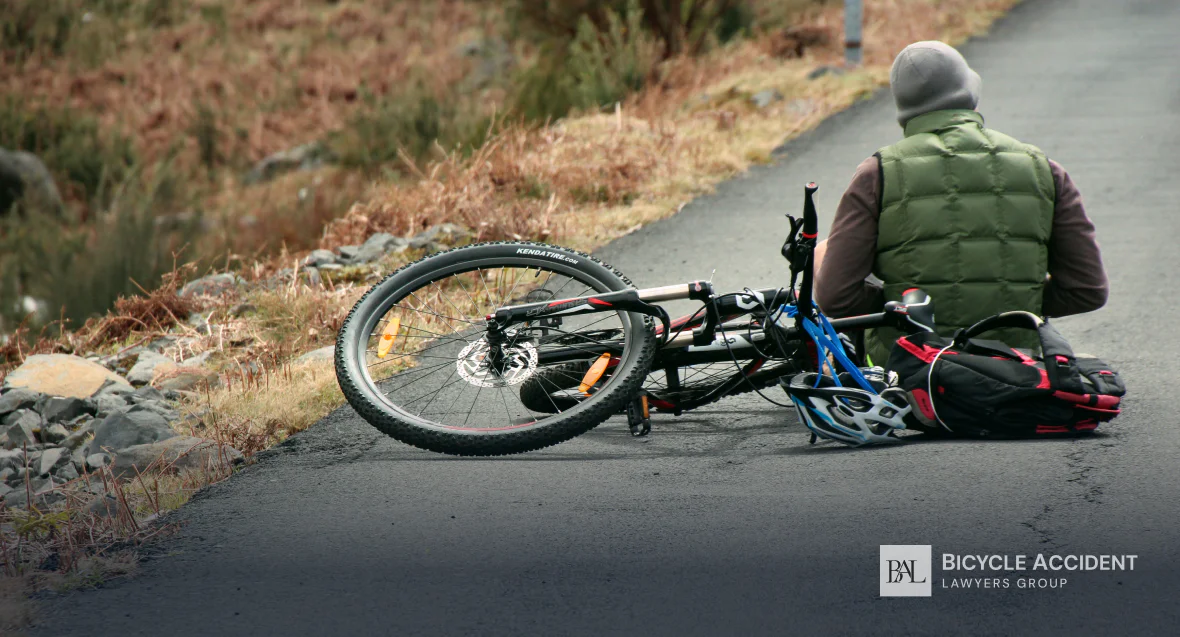

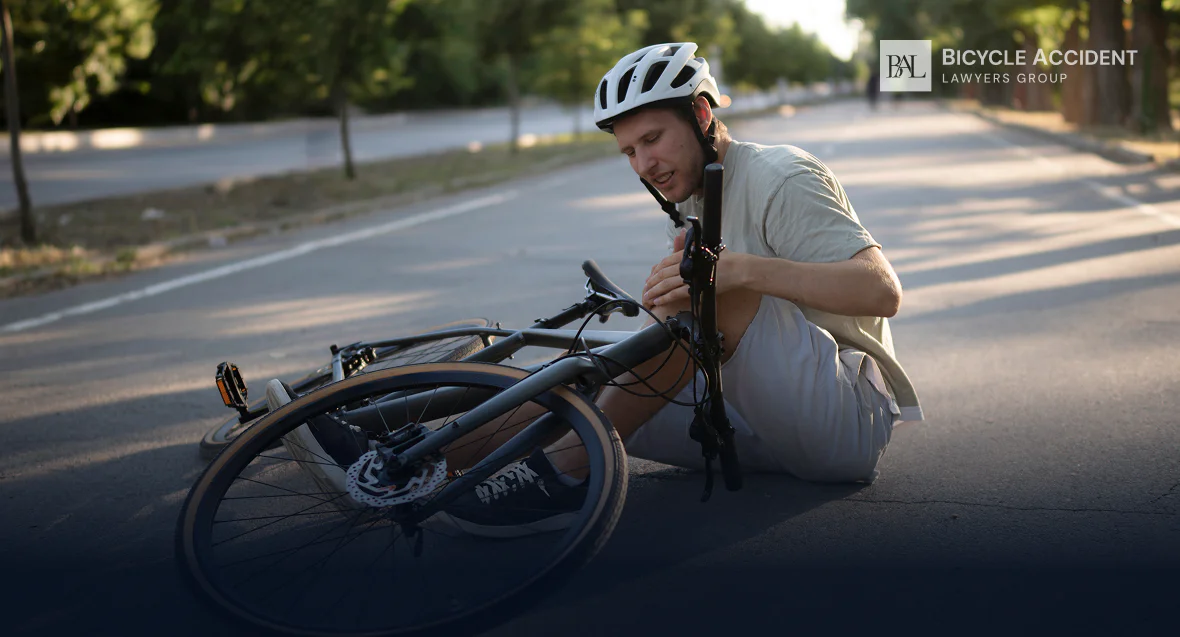
After a bicycle accident in Phoenix, you should call 911, seek medical attention, document the site with photos, collect driver and witness information, preserve your damaged bike and gear, avoid admitting blame, and speak with a Phoenix legal representative before accepting any settlement offer. Taking these important steps protects both your health and your right to pursue compensation under Arizona law.
Our skilled bicycle collision legal team has broken down the practical steps a cyclist should take after a crash in Phoenix. Whether you were hit by a truck or a distracted motorist, this article covers the advice you need right now.
Key steps after a Phoenix bicycle collision:
- Move to safety and stay calm
- Check yourself for injuries
- Call 911 and file a police report
- Get medical help, even if you feel fine
- Exchange driver, insurance, and contact information
- Document the crash site with photos and witness statements
- Preserve your damaged bicycle and gear
- Avoid admitting blame
- Contact a legal professional in Phoenix
- Notify your insurance provider
1. Move to Safety and Stay Calm
Assess your condition after a Phoenix collision and ensure safety. Adrenaline can mask pain and make you feel fine when you are not, so do not rely on how you feel in the moment. Move away from a busy street if possible. If not, stay still and make yourself visible to upcoming traffic to avoid further harm.
2. Check Yourself for Injuries
One of the most common mistakes injured cyclists make after a bike accident is underestimating their injuries. Adrenaline may numb the discomfort for minutes or even hours after the event, so scan your body from head to toe. Do you feel dizzy? This may be a sign of stress or something more serious, like a traumatic brain or head injury. A concussion, even a mild one can have delayed symptoms that only a doctor can properly evaluate.
3. Do You Need to Report a Bicycle Crash in Arizona?
No matter how minor the collision seems, you should still report it. Call 911 as soon as you can, and ask for an ambulance if anyone is hurt. When the first responders and police officers arrive, they will assess the accident scene, your condition, and the approximate losses. The responding officer will also document every detail in an official report, which is a critical piece of evidence if you later file a claim. In Phoenix, having that report strengthens your case and may be required by your auto insurance provider.
4. Why You Should Seek Medical Treatment Promptly
Some harm, such as internal bleeding, concussions, or soft tissue problems, can manifest hours or even days after the incident. Only a trained medical professional can spot the first signs of those conditions early on. Just like a police report, medical records can help you maximize the average bicycle crash settlement in Phoenix. Arizona law sets strict deadlines for legal action, and the statute of limitations in Arizona is two years from the date of the collision. You can learn more about how long after a car accident or bicycle collision you can take action to ensure your rights remain protected.
5. Exchange Driver, Insurance, and Contact Information
If you plan to pursue compensation, you should collect insurance information from all involved in the bicycle crash. Make sure to inquire about the following:
- Full names and address
- Contact phone numbers
- Driver’s license number and badge number (if a police officer is at the location)
- Insurance company name and policy number
- Motor vehicle model, make, color, and license plate number
Be ready to provide your own details in return, and use your smartphone to photograph each document. Our Phoenix bicycle collision lawyers want you to remember: do not approach the at-fault driver involved if they seem agitated or aggressive. Let the police gather the necessary information instead.
6. What Evidence Helps a Phoenix Bicycle Collision Case?
The incident location often contains critical evidence for your bicycle case. If you are not seriously wounded, assess the area and take photos of every element. Our attorneys suggest you focus on the following:
- Photos and videos: Take photos of your wounds, damaged bicycle and gear, vehicle damage, road conditions (including potholes, missing signage, or unsafe conditions on local roads), traffic signals, and skid marks. Use your camera to take pictures from multiple angles.
- Official report: Request a copy of the incident report once the officer has finished documenting the scene.
- Witness statements: Talk to eyewitnesses, if any. Record what they saw, get their names, and ask whether you may contact them later if additional information is needed.
Preserving your damaged bicycle, helmet, and any other gear is also vital. Do not repair or discard anything until your legal representative advises you to do so.
7. Avoid Admitting Fault at the Collision Site
What you say at the crash location can be used against you, as any bicycle accident lawyer would confirm. Stick to the facts when speaking with the other driver, witnesses, and the police. Do not speculate, apologize, or admit responsibility. Arizona follows a comparative fault system, which means your compensation can be reduced by your share of liability, so even a casual apology could shift blame onto you.
8. When Should You Consult a Bicycle Accident Lawyer in Phoenix?
You won’t know the full value of your situation or your legal options unless you speak with someone with experience handling bicycle crashes. Strongly consider consulting a legal professional if:
- You suffered injuries that required medical treatment
- The insurer contacts you with a quick settlement offer
- Liability is disputed or unclear
- The bike crash involved a hit-and-run
- A government entity may be liable (e.g., unsafe road conditions, premises liability, or missing cycling lanes that should ensure safe streets for cyclists and bicyclists)
- You’re unsure how Arizona’s comparative liability rules affect your compensation
Many law firms, including Bicycle Accident Lawyers Group, offer free case evaluations. Reach out, tell your story, and ask which course of action protects your rights and secures fair compensation. You can ask a friend or search for a free case evaluation online. If you do need an attorney, our team works on a contingency fee basis, meaning you pay nothing unless your outcome is successful.
9. Notify Your Insurance Provider
Report the bicycle collision to your insurer even if the incident clearly is not your responsibility, as it speeds up the legal process and prepares your provider for any demands filed against you. If you have personal injury protection PIP as part of your auto insurance coverage, ask about PIP benefits, as these can help with immediate medical bills regardless of who is responsible. Check whether your car insurance or fault insurance policy includes this protection, and get insurance details confirmed in writing.
What Are the Main Potentially Liable Groups in a Bicycle Collision?
Every bicycle collision is unique, and there is no single culprit responsible for every incident on the roads of Arizona. People sometimes assume only cars cause bicycle accidents, but the list of potentially responsible groups includes:
- Motor vehicle operators: When a negligent driver gets distracted, ignores a speed limit sign, runs a red light, or violates traffic laws in any way that leads to a cycling crash, they are accountable. This applies equally to a car crash, a truck accident, and other auto accidents involving bikes in Phoenix. Motorcycle accidents and pedestrian accidents are also common on Arizona streets.
- Government entities: If an incident occurs because of poorly maintained bike lanes, missing or malfunctioning signs, potholes, or other unsafe road conditions, a local or state government entity may be responsible. Demands against government entities in Arizona have shorter filing deadlines, often 180 days, so prompt legal consultation is essential.
- Manufacturer: Some crashes happen because of mechanical failures. If your bicycle malfunctioned because of a defective component, you can pursue compensation from the manufacturer.
- Other road users: A negligent person or fellow cyclist can interfere with your ride and initiate a collision. Pedestrian crashes and other collisions involving road users are more common than most riders realize.
Under Arizona’s comparative fault doctrine, you can also be partially at fault. Injured cyclists who violated AZ bicycle laws, even unknowingly, may see their compensation reduced proportionally.
How Can Lawyers and a Legal Team Help After a Bicycle Crash?
If you haven’t been in a car accident or bicycle collision before, you may not realize the full support a field-savvy Phoenix bicycle collision attorney can provide:
- In-depth evaluation: Reputable legal professionals assess the situation on multiple levels. They understand local regulations, such as Arizona helmet laws, that can affect your case and how to build a solid foundation. Every cyclist should have their questions answered before accepting a settlement.
- Precise calculations: Trained legal professionals go beyond a bicycle accident claim calculator. They will consider future costs, pain, and expenses to maximize your reimbursement.
- Thorough investigation: Legal experts can gather evidence unavailable to you, including medical bills, official reports, witness accounts, and surveillance footage.
- Skilled negotiations: Insurance companies often pressure crash victims into accepting lowball offers. A trained legal professional will counter these tactics and negotiate the fair settlement you deserve.
- Peace of mind: Your legal representative handles the process, meeting all deadlines, navigating Arizona’s statute of limitations, and clearing legal obstacles while you focus on your health and recovery. Our team has handled hundreds of bicycle crashes and understands the questions you may have. Check our recent posts for more guidance on Arizona cycling laws and cyclist safety.

Since his academic days at the UC Berkeley School of Law, Robert Goldwater has remained a committed advocate for victims of other people’s negligence. His tort law background, together with his unquenchable thirst for justice, helped young Robert found a now-successful law firm – Bicycle Accident Lawyers Group, gathering same-minded and promising attorneys from all over the country.