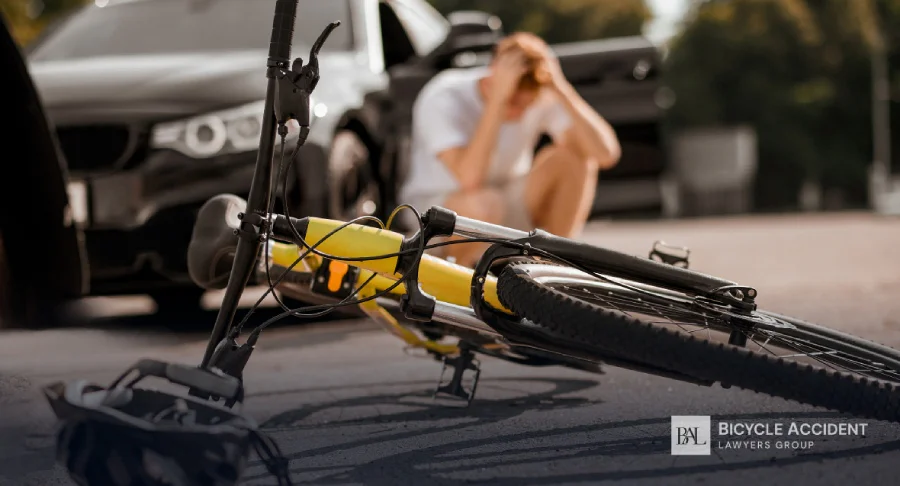

Riding a bicycle under the influence in Colorado is illegal, which means that cyclists can get cited and charged. For many people, it comes as a surprise that a seemingly “safer” option after a few drinks compared to driving can turn into real legal trouble.
Hopping onto a bike under the influence of alcohol or drugs is dangerous not only for the rider but also for other road users, and state law recognizes the risk. In this article, we’ll guide you through the main points of DUI regulations in Colorado so that you understand your rights and options.
What Is a DUI? (Definition & Legal Concept)
DUI stands for driving under the influence, which means operating a vehicle when your abilities are affected by alcohol or other substances. Any substance that alters your ability to drive or ride safely counts, be it marijuana or certain prescription drugs. Importantly, the law applies not only to cars but also to non-motor vehicles.
Most states, including Colorado, set a blood alcohol concentration (BAC) limit that helps the police determine if the rider is drunk. A person with a BAC of 0.08% or higher can be charged with the relevant offense at the time of driving and up to two hours after that.
The situation with other drugs and substances is different. The officer can request that a suspected driver take a drug test, but at the scene, they will pay attention to the operator’s behavior, speech, and physical coordination.
DUI vs. DWAI in Colorado
Colorado recognizes two types of alcohol-related offenses: DUI (driving under the influence) and DWAI (driving while ability impaired) (§42-4-1301). DUI applies when your BAC reaches 0.08% or higher, or when alcohol or drugs have substantially impaired your ability to operate a vehicle.
DWAI applies when your BAC falls between 0.05% and 0.079%, or when you’re impaired “to the slightest degree” but not substantially. Even though DWAI is a lesser offense, it’s still a criminal charge with real consequences.
Bicycle DUI Laws: General US Approach
The general approach to driving under the influence across the country is uniform — it is illegal. However, things aren’t as straightforward when it comes to cyclists. Bicycle DUI laws vary from state to state. Primarily, the legal definition of a “vehicle” determines whether a cyclist faces any legal consequences.
States like Florida and Georgia view bicycles as vehicles, and all the regulations that apply to drivers, including DUI, apply to riders as well. At the same time, Arizona and New York do not treat bicycles as vehicles. Thus, a drunk rider won’t be charged with a corresponding DUI violation. Does it mean that you can drink and ride without fearing any repercussions in such states? No. Local police can still stop you if they suspect something and charge you with public intoxication, endangerment, or similar violations.
Washington’s approach to intoxicated cyclists stands out among other states. Although bicycles are considered vehicles, riding them under the influence is viewed as less dangerous than driving. Thus, the punishment for riders is milder. The police can stop an impaired cyclist, but they don’t cite them for any violation. Instead, they can offer to take the cyclist home, release them to a trusted person, or confiscate the bike, which can be reclaimed once the owner is sober.
Even though the laws change from state to state, one thing remains the same — riding a bike under the influence does not go unnoticed. In some cases, a DUI penalty can be as mild as a mere warning, but more serious consequences are also possible.
State Law: Does Colorado Include Bicycles in DUI Statutes?
Colorado DUI statutes do apply to bicyclists. However, there are a number of differences when it comes to the type of punishment that an intoxicated cyclist faces.
Definition of “Vehicle” in Colorado DUI Laws
The state of Colorado defines vehicles as devices with wheels that can move themselves or be moved from one place to another (§42-1-102(112)). A rider propels a bike, so bicycles fall under this legal category.
Many cyclists mistakenly assume that as long as they don’t drive a motor vehicle, they will stay in the clear even after consuming alcohol. In real life, if you are weaving in the lane, creating dangerous situations, or otherwise behaving recklessly, the officer has the right to stop and cite you. Riding under the influence is a punishable traffic violation in Colorado (§42-4-1301(1)).
Criminal vs. Administrative Penalties: What’s the Difference for Bikes?
Driving under the influence is a serious offense that can trigger both criminal and administrative penalties. The former include fines, court appearances, and even jail time. The latter can result in license suspension, the installation of an ignition interlock device, and even license revocation.
Administrative penalties rarely apply to riders in Colorado. This is partly because not all bicyclists are also drivers. However, criminal charges aren’t something you should brush off lightly. Although in the majority of cases, you just have to pay a fine, repeated offenses can lead to felony charges.
What Happens If You Ride a Bike While Intoxicated in Colorado?
If an officer spots you swerving or struggling to stay balanced, you can expect to be questioned and tested. The rest depends on your condition.
Field Sobriety Tests & Breath Tests
Once you’re stopped for riding a bicycle under the influence, the officer will assess your condition. They may ask you to perform a variety of field tests. For instance, you can be told to walk in a straight line, stand on one leg, or follow an object with your eyes. Colorado law allows the application of the same field tests as those administered to drivers.
Things are different with breath tests, though. Colorado has a specific express consent law, which means that all motor vehicle operators automatically agree to submit to toxicology tests (§ 42-4-1301.1).
However, this law refers specifically to motor vehicles, and bicycles do not belong to this category. This makes it unclear whether there are any possible consequences for riders refusing to take the tests, but it is recommended that you agree. Your refusal can be used as evidence against you if it comes to trial.
Arrest, Booking & Charges
In Colorado, the officer has the right to arrest you if their suspicions are correct. As they cite you for a DUI on a bike, you will be asked to arrange for someone to pick you and your bicycle up or leave the bike at the scene and retrieve it when you are sober.
However, if you pose a serious danger to others or there has been an accident, you will be escorted to the station for booking. The procedure involves law enforcement gathering all the necessary information about you, including but not limited to fingerprints, photos, and other personal details.
Penalties & Consequences
Penalties in Colorado can escalate fast. They can disrupt your life in many ways — financially, legally, and emotionally. The specific punishment depends on whether the incident was your first DUI and on your BAC level.
First Offense Penalties
After the first offense, possible penalties include:
- Imprisonment in a county jail (at least five days and up to a year)
- Fines (from $600 to $1,000)
- Useful public service (48-96 hours).
If your BAC is within the DWAI limits (more than 0.05% but less than 0.08%), the minimum jail time is two days, the range of fines is lower ($200-$500), and you have to do 24-48 hours of public service. On the other hand, those with a BAC higher than 0.20% can face a more serious penalty for the first offense (§ 42-4-1307).
Repeat Offenses and Aggravating Factors
Every time you reoffend, the punishment will become more severe. For instance, the second offense can be punished with at least 10 days of imprisonment. The maximum fine increases to $1,500, and the offender can be assigned more public service hours — up to 120. The second DUI on a bicycle can also lead to a probation period of at least two years with a suspended one-year jail sentence.
The third and subsequent offenses can result in a minimum of 60 days in jail, in addition to the same fines and service hours as defined for the second offense. After the third offense, any new DUI/DWAI becomes a Class 4 felony. Felony sentencing follows different rules under Colorado’s criminal code and can include prison time rather than county jail.
Repeat offenses are considered aggravating factors, but they are not the only issue that can influence the penalty in Colorado. Other aspects considered include a prior conviction for vehicular homicide or assault, driving with a revoked license, or driving while the license was suspended.
Impact on Driving Privileges or Records
If you have a valid license, the incident can affect your driving privileges and insurance rates. Most convictions are reported to the state, so they can appear on your record. If your insurer notices this, your premiums may increase. The potential insurance implications depend on your insurance provider’s specific DUI policies.
Statistics & Risks: Alcohol Involvement in Bicycle Accidents
In 2023, NHTSA reported alcohol involvement (any BAC of 0.01%+ for the driver and/or the killed cyclist) in 34% of fatal pedalcyclist crashes in the US. Accidents that involved an impaired driver with a BAC over 0.08% accounted for 14%, and crashes with riders whose BAC was over the legal limit constituted 18% of fatal bike accidents.
In Colorado, the share of bicycle accidents that involved alcohol was close to the nationwide rate in 2023: the driver and/or the rider had a BAC of at least 0.01% in 33% of fatal crashes. The data from FARS shows that drivers were legally impaired (BAC of 0.08% or higher) in 21% of fatal bicycle crashes, while cyclists were legally impaired in only 10% of cases. In just 5% of fatal crashes, both the driver and cyclist had BAC levels above the legal limit.
The majority of fatal bicycle crashes — 68% — involved a sober cyclist struck by a sober driver. Thus, impairment is only one factor among many that contribute to deadly collisions. However, when alcohol is involved, the consequences can be severe. The bike accident statistics underscore an important reality: while riding a bicycle under the influence creates legal and safety risks for the rider, impaired drivers are an even greater threat to cyclists on Colorado roads.
Practical Advice & Safety Tips
Don’t drink and ride. That is the first and foremost advice you should remember. Of course, it is too obvious, so we have a few other practical tips you may want to consider to save yourself from getting a DUI on a bike in Colorado:
- It’s all about planning. If you know that you are heading somewhere where there will be alcohol, leave all of your vehicles at home. It is better to walk, call a taxi, or take a bus.
- “Fine” is not enough. Your feelings after a few shots can be very misleading. Even if you feel like you could still ride just fine, it’s better to be safe than sorry. Besides, there’s always the possibility of delayed effects of alcohol. Don’t rely on your judgment in such situations.
- Don’t assume short distances are safe. Even if you live a block away from the bar, don’t test your impaired abilities. A single sudden swerve out of your lane can lead to an accident.
Finally, if you are stopped and facing a DUI on a bicycle, do not escalate the situation. Remain respectful to the officers. Take a few minutes and ask if you can consult a lawyer, just to be sure of where you stand.
And if you are injured in an accident while also being under the influence, you may still be entitled to compensation for your injuries. At Bicycle Accident Lawyers Group, we can help you analyze the situation and understand your options.
When to Consult a Lawyer?
Short answer — any time you are facing a DUI on a bike or if cycling under the influence is used against you in a personal injury claim. If you are stopped and about to be tested, let alone arrested, you should request a consultation with a lawyer. Things get even more pressing if you’ve been in a car vs. bicycle accident and you or someone else was injured.
A crash may not be your fault, but the fact that you are under the influence may compromise your chances of a fair outcome. Besides, you can say something that can turn into a costly mistake right at the scene. A qualified lawyer will help you avoid potential legal pitfalls you didn’t know existed.
At BALG, we offer free consultations for cyclists. If you have any questions or need immediate legal assistance, call us or fill out our contact form!
Conclusion
Operating a vehicle under the influence in Colorado is a punishable offense, and you can get charged even when riding a bike. State law takes it seriously, and offenders often face fines, court appearances, and even jail time. Certainly, a short ride after a few drinks isn’t worth the trouble. Yet, should the unexpected happen, knowing your rights and getting professional legal guidance early can make a real difference.
Our Colorado lawyers can help you handle complicated legal procedures, minimize penalties, and protect your record. Contact us through our simple online form or via phone, and expert help will be on its way!
Sources
- CO Rev Stat § 42-1-102 (2024). Definitions
- CO Rev Stat § 42-2-126 (2024). Revocation of license
- CO Rev Stat § 42-4-1301 (2024). Driving under the influence
- CO Rev Stat § 42-4-1301.1 (2024). Expressed consent
- CO Rev Stat § 42-4-1307 (2024). Penalties for traffic offenses involving alcohol and drugs
- CO Rev Stat § 42-4-1412 (2024). Operation of bicycles, electric scooters, and other human-powered vehicles
- Colorado: Crime Classification Guide – Felonies
- Colorado State Patrol, Don’t Ruin the Ride
- Colorado State Patrol. Insurance Implications
- Fatality Analysis Reporting System (FARS) — Fatal Pedalcyclist Crashes, by Alcohol Involvement
- NHTSA Traffic Safety Facts 2023 Data: Bicyclists and Other Cyclists
If you’re a cyclist who has been in an accident, call today for a free initial consult about your legal claim. We’re here to help with your legal questions. Contact our law firm for coast-to-coast bike accident and personal injury representation.


Since his academic days at the UC Berkeley School of Law, Robert Goldwater has remained a committed advocate for victims of other people’s negligence. His tort law background, together with his unquenchable thirst for justice, helped young Robert found a now-successful law firm – Bicycle Accident Lawyers Group, gathering same-minded and promising attorneys from all over the country.