Call Now - Open 24/7
888-521-6377
Bicycle Accident Lawyers
Nationally Recognized

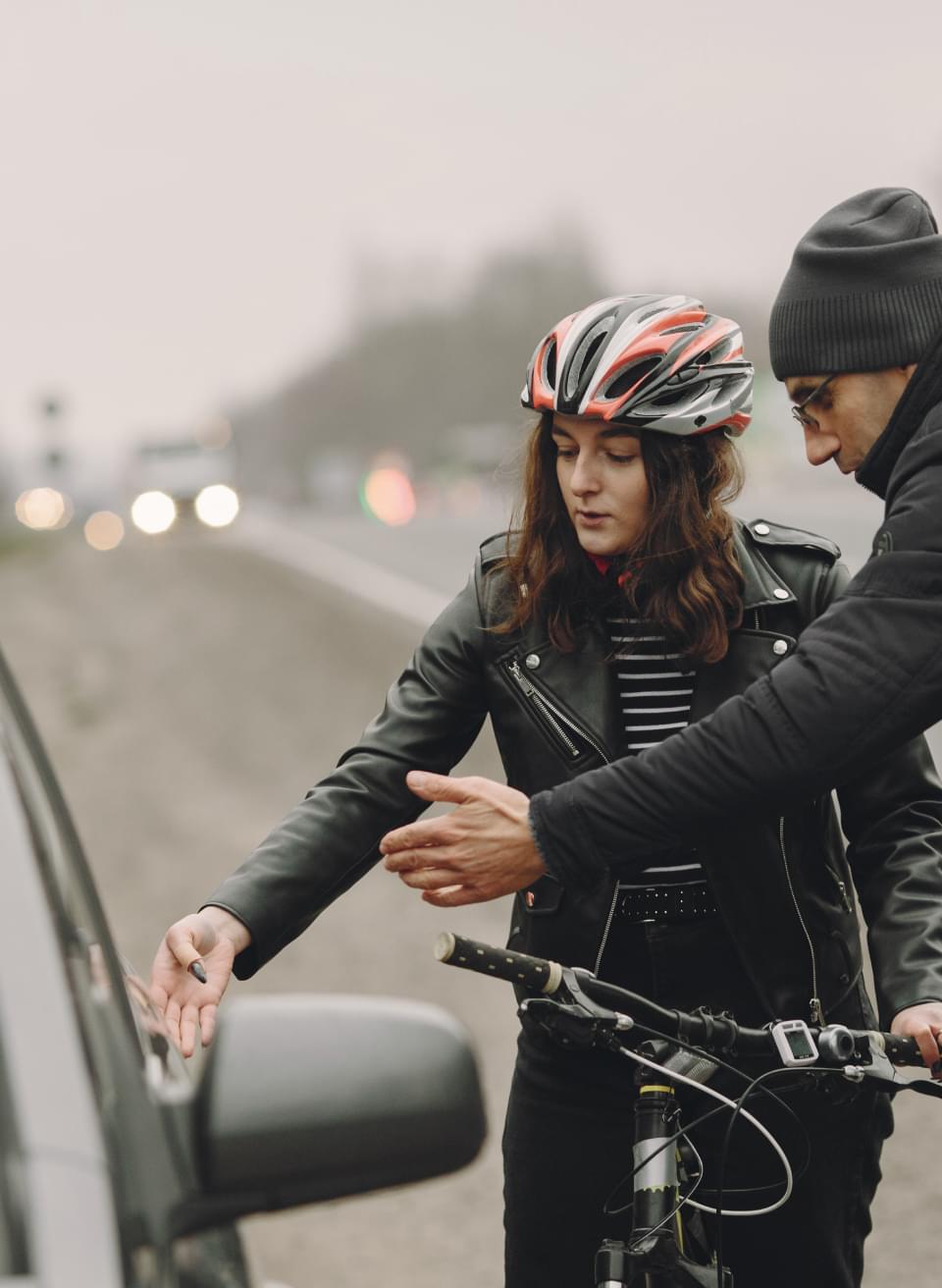
Car vs. Bicycle Accident Lawyer

Need help from a car vs. bicycle accident lawyer? Speak with a Bicycle Accident Lawyers Group attorney today. We explain your rights in plain English and fight for the full value of your claim.

  • Free consultation
  • No fee until we win
  • Nationwide representation
Start Your Free Evaluation
Record-setting verdicts and settlements throughout the U.S.
Robert Goldwater
Leading Bicycle Accident Lawyer
What is

What Qualifies as a Car vs. Bicycle Accident?

A car vs. bicycle accident is any crash in which a motor vehicle and a cyclist collide, or a motorist’s action causes a cyclist to fall or make a dangerous maneuver that leads to an injury. These accidents account for most bike-car fatalities nationwide: passenger cars and light trucks are involved in 98% of fatal bicycle crashes. Typical scenarios are:

  • Dooring (when a car door opens into a cyclist’s path)
  • Intersection collisions (left-turn and right-hook hits)
  • Passing too closely or at high speed
  • Rear-end impacts (when a car hits a bicycle from behind)
  • Driveway and parking lot exits.

If you were injured in a bicycle collision with a car, you should get legal guidance right away.

img
Liability

Liability in Car vs. Bicycle Accidents

The fault in a bike vs. car crash depends on negligence: who failed to use reasonable care and caused damage to the other party. To determine negligence in bike accidents, investigators use evidence like dashcam footage, phone records, and event data recorder (EDR) information.

Some cases can involve multiple responsible parties. Injured cyclists can even share liability in a bicycle vs. car accident. In such situations, comparative fault rules can reduce the settlement or bar recovery.

Bicycle Accident Lawyers

Car Driver's Liability

Motorists bear fault in the majority of cases due to failure to yield, speeding, or distracted driving.

Car driver liability in bicycle accidents is often due to these actions:
  • Turning left across a cyclist’s path
  • Right-hook hits at intersections or driveways
  • Texting or using apps on their phones while driving
  • Dooring or blocking bike lanes
  • Following too closely.

According to NHTSA, a single motorist is at fault for the bike crash in 94% of cases. The other 6% involve multiple vehicles — in such situations, there can be many liable drivers.

img
Cyclist’s Liability

Riders can also be at fault for the crash in the following scenarios:

  • Running red lights or stop signs
  • Riding against traffic
  • Not having front lights or rear reflectors at night
  • Suddenly changing lanes without signaling
  • Entering crosswalks without yielding.

Cyclist liability in a car accident can lead to a reduced payout or a denied claim. In most bicyclist fault collisions, riders can still recover some compensation, but they will likely also be responsible for the damages they caused to the other party.

Both the Car Driver and the Cyclist Are at Fault

Many collisions involve shared fault, when numerous parties are responsible. If the state applies contributory negligence in bicycle accidents, the party that shares even 1% of the fault will be barred from recovery. Comparative fault is a more forgiving system — damages are reduced by liability percentage or barred if a party exceeds a set threshold (50% in most states).

In a bike crash with shared fault, your compensation depends on state rules and evidence. A lawyer will assess facts and assign liability percentages accordingly, confidently refuting any attempts by other parties’ defenses to shift responsibility.

Bicycle Accident Lawyers
Causes

Common Causes of Car vs. Bicycle Collisions

The leading causes of bicycle vs. car accidents include drunk driving, distractions, dooring, speeding, poor visibility, and unsafe passing. Intersections and turning conflicts drive a large share of crashes.

Below is an overview of common reasons for a bike crash with a car:

Drunk driving

Alcohol involvement contributes to 30% of fatal crashes.

Dooring

Suddenly opened doors cause between 10% and 20% of bike crashes with cars. Urban curb lanes and parked cars increase the risk.

Distracted driving

Phone use correlates with delayed reaction and late braking. As a result, distracted drivers cause 11% of fatal accidents.

Speeding

About 10% of collisions with cars happen due to high speeds.

Unsafe passing/overtaking

In fatal single-vehicle crashes, cyclists are most often struck by the front of passenger vehicles (82%), while 8% involve right-side impacts.

Night visibility

50% of fatalities occur in the dark, even though fewer people ride at night.

Laws

Laws That Govern Car vs. Bicycle Accidents

Federal, state, and local traffic codes can determine the bike crash legal rules that apply to your case. Federal bicycle accident laws set general roadway standards and regulate certain types of transportation, such as interstate trucking safety. More specific cycling traffic laws, such as regulations of safe passing, helmet use, sidewalk riding, and lane positioning, differ widely across states, counties, and cities.

Nationwide Laws

Nationwide bicycle laws set the floor for safe roads, but they don’t govern day‑to‑day traffic offenses. The Manual on Uniform Traffic Control Devices (MUTCD) standardizes bicycle signs, lane markings, and signals. The National Highway Traffic Safety Administration (NHTSA) and the Federal Highway Administration (FHWA) issue safety recommendations on separation, visibility, and speed management.

Federal bike accident rules shape how evidence is evaluated after a crash (e.g., whether markings and warnings met national standards). However, they don’t override state codes on right‑of‑way, passing distances, or helmets — these are the areas of key US bike crash legal differences.


New York

New York allows cyclists to use the roadway and requires drivers to exercise due care; helmet use is mandatory under age 14. State law prohibits opening a car door into traffic if unsafe and requires the use of bike lanes, where provided, with sensible exceptions. Some counties and cities in the state have local regulations, so to understand which laws apply to your case, contact our New York bike crash attorney.

Pennsylvania

Pennsylvania bike crash rules include a 4‑foot passing distance and the right to take a lane when it is too narrow to share safely. Sidewalk riding is generally restricted in business districts. Cyclists must use signals before turns or lane changes.

California

In this state, riders under 18 years old must wear helmets. Cyclists can share the road with cars or use bike lanes, but riding on the sidewalk is regulated locally (by cities and counties). California bike crash rules include the 3‑foot passing law, the prohibition of bike path obstruction, and the requirement to yield the right-of-way to pedestrians.

State-Specific Laws

Most cases are regulated by local bike traffic rules, such as state vehicle codes and local ordinances. State bicycle accident laws vary — requirements for safe passing are one of the most prominent examples:

  • Florida: 3‑foot minimum when passing; bikes may use the full lane.
  • California: 3‑foot passing law (CVC 21760); drivers must change lanes when safe.
  • Pennsylvania: 4‑foot passing law; bikes may use a full lane when needed.

Other areas with critical differences are helmet requirements, riding on the sidewalk, and headphone use.

New York, Pennsylvania and California Specific Laws

New York

New York allows cyclists to use the roadway and requires drivers to exercise due care; helmet use is mandatory under age 14. State law prohibits opening a car door into traffic if unsafe and requires the use of bike lanes, where provided, with sensible exceptions. Some counties and cities in the state have local regulations, so to understand which laws apply to your case, contact our New York bike crash attorney.

Pennsylvania

Pennsylvania bike crash rules include a 4‑foot passing distance and the right to take a lane when it is too narrow to share safely. Sidewalk riding is generally restricted in business districts. Cyclists must use signals before turns or lane changes.

California

In this state, riders under 18 years old must wear helmets. Cyclists can share the road with cars or use bike lanes, but riding on the sidewalk is regulated locally (by cities and counties). California bike crash rules include the 3‑foot passing law, the prohibition of bike path obstruction, and the requirement to yield the right-of-way to pedestrians.

Get a FREE case evaluation
888-521-6377
Call Now - Open 24/7
Start Your
Free Evaluation
Bicycle Accident Lawyers
Typical Injuries

Typical Injuries in Car vs. Bicycle Accidents

The severity of the common bike crash injuries rises with speed and impact angle. Prompt diagnosis and complete medical records help connect every injury to the collision. Bicycle vs. car accident injuries often include:

Concussions and other head injuries (with or without a helmet)
Broken collarbones, wrists, ribs, hips, or legs
Back and neck injuries, including herniated discs
Deep cuts, bruising, and road rash
Dental injuries and facial fractures
Psychological trauma

Other Types of Collisions We Work With

Bike accidents do not always involve cars. Our lawyers handle many crash pairings:

  • Bicycle vs. pedestrian accident: In case of sidewalk or crosswalk conflicts, shared trails, or crowd surges, it might be difficult to determine who was at fault. Our lawyers know how to handle such sensitive cases with two types of vulnerable road users.
  • Bicycle vs. bicycle collision: Group rides, narrow trails, or path merging often lead to unfortunate bike-on-bike crashes. The laws regulating such situations are complicated, but we have extensive experience resolving them.
  • Bicycle vs. motorbike crash: Lane sharing disputes and speed differentials should be taken into account. Our attorneys understand the insurance problems and potential legal pitfalls in these cases.
  • Bicycle vs. truck accident: Wide turns, long stopping distances, and large blind spots create severe risk. The legal team at our law firm helps victims untangle the commercial insurance rules and corporate policies, determine all potential negligent parties, and collect the right evidence — such as driver logs — in time.

Each type requires specific expertise. At Bicycle Accident Lawyers Group, we’ve handled all of these accident types and more, so we know what to look for to ensure the best outcome for you.

Contact Our Bicycle vs. Car Accident Lawyers for a Free Consultation!

We offer free consultations with a bicycle accident lawyer to discuss your case. Call (888) 521‑6377 or use our quick form to contact a bike crash attorney at Bicycle Accident Lawyers Group. We respond the same day, explain next steps, and start protecting your claim immediately.

Start Your
Free Evaluation
Bicycle Accident Lawyers
Settlements

Our Settlements

Our results from bike crash cases span complex bicycle‑car collisions and unsafe‑road claims.

Hit-and-Run Incident
$1,500,000
Settlement

Intensive investigation and video analysis identified the driver and unlocked multiple coverage layers.

Unsafe Street Surface
$825,000
Settlement

We proved dangerous road conditions and municipal notice, securing coverage for surgeries and future care.

Distracted Driver at an Intersection
$300,000
Settlement

Phone records and camera footage confirmed the fault and produced a six‑figure recovery.

What to Do After a Bicycle Accident Involving a Car?

Here’s what to do after a bicycle vs. car accident:

  • Move out of traffic and call 911.
  • Get medical help and follow orders.
  • Photograph vehicles, your bike, the road, signs, and lighting conditions.
  • Collect witness names and numbers.
  • Ask for the police report number.
  • Call a lawyer for the next steps.


The right steps after a bike crash with a car depend on the conditions of the incident. Contact our bicycle accident lawyers for a free consultation and learn what the best course of action is in your case!

Robert Goldwater (11811 N. Tatum Blvd., Ste. 3031, Phoenix, AZ 85028) is licensed to practice law in Arizona only. However, he associates with attorneys throughout the country. While our firm maintains joint responsibility, cases may be referred to other attorneys for principal responsibility. 

WY disclosure: The Wyoming State Bar does not certify any lawyer as a specialist or expert.

What Types of Damages Can Be Recovered in a Bicycle vs. Car Crash?

Damages in a bicycle vs. car accident include economic and non‑economic losses, such as:

  • Past and future medical bills, rehabilitation, and equipment
  • Lost wages and reduced earning capacity
  • Bike and gear replacement
  • Pain, suffering, and emotional distress
  • Ask for the police report number.
  • Loss of enjoyment of life.

Your bike crash compensation must cover these aspects, but it also depends on liability, policy limits, and documented losses.

Car vs. Bicycle Accident Statistics

Recent bicycle accident statistics from NHTSA show 1,166 cyclist deaths and an estimated 49,989 injuries in 2023. About 81% of deaths occurred in urban areas; 28% happened at intersections.

More context: 53% of fatalities occurred in the dark; weekday evenings and weekend nights show the highest risk bands. Visit our bicycle accident statistics page for bike crash data from 2025 and city snapshots.

How to Choose a Bicycle vs. Car Accident Lawyer?

When choosing a bicycle accident lawyer, consider these factors:

  • Specific bicycle law experience and trial readiness
  • Proven settlements and verdicts involving bikes and cars
  • Access to experts for crash reconstruction or medical evaluations
  • Clear communication and fast responses
  • Contingency fee arrangements.

The best bike crash attorney for you will be the one who knows your state’s or city’s regulations and works with cases like yours. To make the right decision, talk to the team, ask for case examples, and confirm who will handle your claim day‑to‑day.

Ready to start working on your case? Meet our team during a free case review today!

Get a FREE case evaluation
888-521-6377
Call Now - Open 24/7
Start Your
Free Evaluation
Bicycle Accident Lawyers

Get a FREE case evaluation today

If you’re a cyclist or motorists who has been in an accident, call today for a free initial consult about your legal claim. We’re here to help with your legal questions. Contact our law firm for coast-to-coast bike accident and personal injury representation.

Call us now at:
888-521-6377

Start Your Free Consultation

Supply a few simple details about your injury and our team will take it from there.

First Name
Start Your Free Consultation
Last Name
Start Your Free Consultation
E-mail
Start Your Free Consultation
Phone
Start Your Free Consultation
Which state did the accident occur in? Which state did the accident occur in?
  • Which state did the accident occur in?
  • Alabama
  • Alaska
  • Arizona
  • Arkansas
  • California
  • Colorado
  • Connecticut
  • Delaware
  • Florida
  • Georgia
  • Hawaii
  • Idaho
  • Illinois
  • Indiana
  • Iowa
  • Kansas
  • Kentucky
  • Louisiana
  • Maine
  • Maryland
  • Massachusetts
  • Michigan
  • Minnesota
  • Mississippi
  • Missouri
  • Montana
  • Nebraska
  • Nevada
  • New Hampshire
  • New Jersey
  • New Mexico
  • New York
  • North Carolina
  • North Dakota
  • Ohio
  • Oklahoma
  • Oregon
  • Pennsylvania
  • Rhode Island
  • South Carolina
  • South Dakota
  • Tennessee
  • Texas
  • Utah
  • Vermont
  • Virginia
  • Washington
  • West Virginia
  • Wisconsin
  • Wyoming
What was the date of the accident?
Message
Start Your Free Consultation

We will do our best to reach you as soon as possible.

For urgent queries please call
888-521-6377
Latest update:
Start Your Free Evaluation