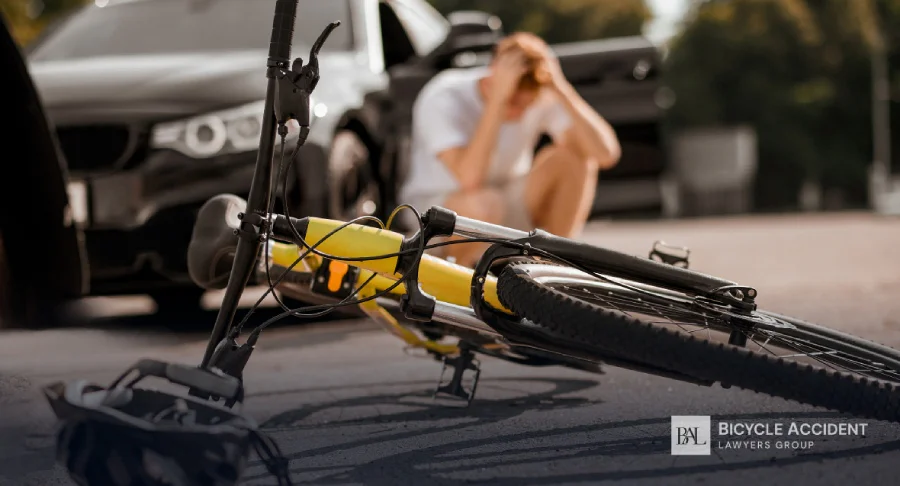

You can get cited for riding a bicycle while intoxicated in California. However, it won’t be charged as the same DUI that applies to motor vehicle drivers. Instead, California has a separate law aimed at cycling under the influence.
In this article, the Bicycle Accident Lawyers Group team explains the key aspects of California laws that apply to biking under the influence. We’ll help you understand what usually happens during a stop, what penalties are possible, and when you might need a lawyer.
- What Is a DUI? (Definition & Legal Concept)
- Bicycles Under DUI Laws: General U.S. Approach
- State Law: Does California Include Bicycles in DUI Statutes?
- What Happens If You Ride a Bike While Intoxicated in California?
- Penalties & Consequences
- Statistics and Risks: Bicycle Crashes with Alcohol Involvement in California
- Key Bicyclist Crash & Alcohol Stats Nationwide
- Practical Advice & Safety Tips
- When to Consult a Lawyer?
- Conclusion
- Sources
- Get a FREE case evaluation today
What Is a DUI? (Definition & Legal Concept)
DUI (driving under the influence) means operating a vehicle while alcohol, drugs, or a combination of both has impaired your ability to drive safely. The legal concept of DUI usually covers two types of offenses:
- DUI per se: You violate the law if your blood alcohol concentration (BAC) is 0.08% or more. The limit can be lower for people under 21 years old or commercial drivers.
- Impairment-based DUI: Your BAC might be less than 0.08%, but you have consumed alcohol or another substance, and it has impaired your driving ability enough that the police notice and deem you unfit to drive.
DUI laws were developed with drivers of motor vehicles in mind because impaired driving is one of the leading causes of traffic accidents across the country. It causes delayed reaction time, poor judgment, and a higher chance of severe injuries. Bikes bring different risks, but impairment still matters, especially in traffic, at intersections, and around parked cars.
Bicycles Under DUI Laws: General U.S. Approach
While driving under the influence is illegal in all states, the application of DUI laws to cyclists varies. States don’t all treat bikes the same way. The possibility of being charged for impaired biking depends on how the law defines “vehicle” (and who counts as a “driver”) in its DUI statute.
In some regions, bicycles are treated the same as cars and other motor vehicles, while in others, they are classified separately. For example, in Florida and Colorado, bicycles are vehicles; thus, they are subject to local DUI laws. This means that a rider can be stopped, tested, and charged as though they were driving a car while intoxicated.
At the same time, in states like New York and Arizona, a traditional bike isn’t classified as a motor vehicle. That is why a cyclist won’t face standard DUI charges. Before you rush to assume that in these states, it is safe to drink and ride — don’t. Even though you can’t be charged with regular driving under the influence violations, you can still face penalties for public intoxication, reckless behavior, and public endangerment.
Lastly, some states, such as California and Washington, handle cycling under the influence through a separate offense rather than the standard DUI section. This approach usually reflects a policy choice: punish impaired riding, but don’t automatically impose the same license and DMV penalties designed for cars.
No matter what group the state belongs to, the specific penalties can be different. For more information about such regulations, check out our state-by-state DUI on a bicycle analysis.
State Law: Does California Include Bicycles in DUI Statutes?
In California, the standard DUI law (Vehicle Code § 23152) applies to people who drive a “vehicle” while impaired or at/above the BAC threshold. Bicycles fall under a different section of the law: Vehicle Code § 21200.5, which makes it unlawful to ride a bicycle on a highway while under the influence of alcohol or drugs. That’s why you’ll see the situation described as a DUI on a bike, even though the charge often looks different from a car DUI on paper.
Definition of “Vehicle” in California DUI Laws
In California, a vehicle is legally defined as a device by which a person or property may be propelled, moved, or drawn upon a highway. However, this excludes devices moved exclusively by human power. That definition helps explain the split:
- Car DUI prosecutions usually run through § 23152.
- Bicycle intoxication cases usually run through § 21200.5 instead.
One practical takeaway: if what you’re riding is legally treated more like a motorized vehicle (for example, certain mopeds), the rules can change. A lawyer can sort that out fast based on the exact vehicle.
Criminal vs. Administrative Penalties: What’s the Difference for Bikes?
The penalties for impaired driving and biking under the influence (BUI) differ in California. A standard DUI can result in both criminal and administrative charges (through the DMV). The former often include fines, probation, and jail time. The administrative consequences can lead to license suspension, ignition interlock device installation, and mandatory educational programs.
In BUI cases, the DMV track often looks different because the implied-consent and automatic license-suspension system is written around someone “driving a motor vehicle” in a DUI arrest context. The main punishment is a fine, but a BUI for people under 21 can trigger license suspension or a delay in getting a license under Vehicle Code § 13202.5.
What Happens If You Ride a Bike While Intoxicated in California?
A stop for cycling under the influence can start like any other traffic stop: a swerve across the lane line, running a stop sign, riding without lights at night, or a crash that brings police to the scene. From there, officers usually focus on two questions:
- Are you impaired?
- Are you creating a safety risk for yourself or other road users?
What happens next depends on the facts and the officer’s judgment. Some riders get cited and released. Others get arrested, especially when there’s a collision, an injury, or unsafe behavior in traffic.
Field Sobriety Tests & Breath Tests
Police can use the same basic tools they use in impaired-driving investigations:
- Observations (odor of alcohol, bloodshot eyes, balance issues)
- Questions about drinking or drug use
- Field sobriety tests.
You might be asked to walk in a straight line, stand on one leg, or follow an object with your eyes.
As for the breath and chemical tests, cyclists, unlike drivers, aren’t legally required to take one. However, if you believe that the officer is wrong about your condition, you may request a chemical test (blood, breath, or urine) “pursuant to Section 23612,” and the officer must have the test performed if requested.
That’s different from the usual “implied consent” framing people associate with car DUI. In plain terms, chemical testing can still come into play, but the procedural posture is not always identical to a motor-vehicle DUI.
Arrest, Booking, and Charges
If the officer decides the situation is serious enough for arrest, the process can look like this:
- Detention and arrest on suspicion of violating § 21200.5
- Booking (fingerprints, paperwork, and release terms)
- A court date, with formal charges filed (or sometimes declined) after review.
Even when the penalty seems “small,” the case can still matter. A misdemeanor record can create problems down the line, and if you get into an accident while drunk-riding, whether you caused it or not, liability disputes become complicated.
Penalties & Consequences
For many people, the biggest surprise is that BUI in California is a misdemeanor. It comes with legal consequences, even though they are milder than a standard DUI. Here’s an overview of DUI vs. BUI penalties in California:
| Issue | Motor-Vehicle DUI (VC § 23152) | Bicycle Intoxication (VC § 21200.5) |
| Core conduct | Driving a vehicle while impaired | Riding a bicycle while intoxicated |
| Typical case type | Criminal DUI prosecution | Usually an infraction citation |
| BAC per se rule | 0.08% (most drivers) | Not framed as a per se BAC offense |
| Common outcomes | Fines, probation, possible jail, DUI classes | Fine (often up to $250) |
There may also be differences depending on previous violation records, age, and other factors.
First Offense Penalties
A BUI conviction in California is punishable by a fine of up to $250. Offenders are usually not imprisoned, unlike those who face a DUI charge. Still, a DUI on a bicycle can leave a mark on your record since impaired riding is considered a criminal offense.
The fine amount doesn’t include everything that can come with a criminal case (court costs, fees, and the practical cost of dealing with the charge). And if the incident involved a collision, the “real” consequences often include even more expenses and stress: medical bills, damaged property, and the arguments about who caused what.
Repeat Offenses and Aggravating Factors
California statutes do not directly mention any penalties for repeat offenses tied to cycling under the influence of drugs or alcohol. However, repeat behavior can still raise the stakes in practice. Prosecutors and judges often treat repeat conduct as a sign that the rider won’t self-correct, and a criminal record can result in them considering harsher punishment.
The law doesn’t clearly define other aggravating factors, but additional charges are possible in situations such as:
- A crash with injury (which can lead to criminal charges beyond the bike intoxication citation and also civil liability)
- Property damage
- Riding into traffic in a way that creates a major hazard
- A child passenger situation (rare on bikes, but it happens).
Also, repeatedly riding while impaired increases the odds that the rider eventually crashes, gets hurt, or hurts someone else. Such situations can lead to additional charges or more serious civil liability.
Impact on Driving Privileges or Records
Many people miss this part, but the bike offense can still affect your ability to drive in specific situations, even though it’s not the same as a standard car DUI. If you’re under 21, California courts can suspend your driving privilege (or delay issuing a license) for one year for certain alcohol- and drug-related offenses, and § 21200.5 is explicitly tied into that rule.
For adults, a bicycle case is less likely to trigger the standard DMV suspension system that follows many car DUI arrests. However, there can be insurance implications. Even when the DMV doesn’t suspend a license, a criminal conviction can still create problems with underwriting, background checks, or employment policies. If you were injured in a crash while under the influence, the insurer might use your intoxication as a reason to lower your compensation.
Statistics and Risks: Bicycle Crashes with Alcohol Involvement in California
The League of American Bicyclists ranked California the fourth-most bicycle-friendly state in the country in 2024. The state report card highlights California’s achievements in policies, laws, and infrastructure for cycling.
At the same time, California remains among the most dangerous states in the US in terms of cyclist fatalities. Our bike accident statistics show that it had the second-highest number of riders killed in traffic accidents: there were 145 cyclist fatalities in the state in 2023. And it’s not just due to a larger population — riders made up 3.6% of all traffic fatalities, which is higher than the national average of 2.8%.
About 37% of crashes that resulted in rider deaths involved alcohol, meaning that alcohol was present for the driver and/or the pedalcyclist, as reported by NHTSA. Out of those crashes, 20% involved specifically cycling under the influence (with a BAC of 0.08% or more) or while impaired (BAC of 0.01%-0.07%). In most accidents, however, all parties were sober.
This doesn’t mean that it’s safe to ride your bicycle after consuming alcohol or other substances. Your reaction time and decision-making are impacted even if you didn’t drink much, which can increase your chances of crashing due to a road defect or sustaining more severe injuries.
Key Bicyclist Crash & Alcohol Stats Nationwide
Across the US, more than 12K people lost their lives in traffic crashes that involved alcohol in 2023. Every 42 minutes, one person died from an alcohol-impaired driving collision. In total, 30% of traffic fatalities were caused by DUI.
When it comes to cyclists, 34% of fatal accidents involved alcohol, including impairment of drivers and/or riders. In around 18% of those crashes, a bicyclist had a BAC over 0.08%. Cycling under the influence isn’t rare in fatal crash data, and it often mixes with impaired driving by motorists.
Practical Advice & Safety Tips
Most people don’t plan to end up in a police stop or a crash. They plan to get home. A few realistic choices can keep you out of this situation.
If you’ve been drinking, don’t “test your skills” on a bike. Alcohol changes your balance and your confidence in a way that makes bad decisions feel smart.
Here are safer options that actually work in California cities:
- Use rideshare or a taxi.
- Take public transit if it runs late where you are.
- Walk your bike (don’t ride it) if you’re close and stable.
- Call a sober friend.
- Plan the ride home before you go out.
That list sounds obvious, but it’s the difference between a normal night and a crash scene.
When to Consult a Lawyer?
A simple BUI citation may not require professional legal representation. However, it’s recommended that you contact a lawyer if the police stopped you for a DUI on a bike but you believe that the allegations are untrue, the stop or investigation crossed legal lines, or you’re facing additional charges.
Hiring an attorney is especially important if you had a car vs. bicycle collision while under the influence and sustained injuries. If a driver hits you and shifts the blame onto you for being drunk or the police claim you caused the collision, it can be difficult to protect your rights. A lawyer can determine who is actually at fault and to what extent. Understanding the potential value of your claim is crucial in these cases; for instance, you can learn more about the average bicycle accident settlement in California to see how intoxication might factor into the final compensation. A professional can help you achieve a settlement that still fairly compensates you for your injuries despite the complexities of the case.
Conclusion
California takes a more lenient approach to biking under the influence than many states, but it doesn’t give drunk cycling a free pass. You can be charged with BUI, and the case might impact your record.
It’s always recommended that you don’t ride impaired, even if you think you will be fine. If you were stopped, arrested, or injured in a crash where impairment is an issue, contact Bicycle Accident Lawyers Group. We can look at the report, break down what the law means for your specific case, and help you protect your rights — especially when the other side tries to use intoxication claims to avoid responsibility.
Sources
- CA Vehicle Code § 670
- CA Vehicle Code § 13202.5
- CA Vehicle Code § 21200.5
- CA Vehicle Code § 23152
- CA Vehicle Code § 23612
- Fatality Analysis Reporting System (FARS) — Alcohol-Impaired Driving
- Fatality Analysis Reporting System (FARS) — Fatal Pedalcyclist Crashes, by Alcohol Involvement
- League of American Bicyclists: California Rank Card 2024
- League of American Bicyclists: State Bike Laws

Since his academic days at the UC Berkeley School of Law, Robert Goldwater has remained a committed advocate for victims of other people’s negligence. His tort law background, together with his unquenchable thirst for justice, helped young Robert found a now-successful law firm – Bicycle Accident Lawyers Group, gathering same-minded and promising attorneys from all over the country.