

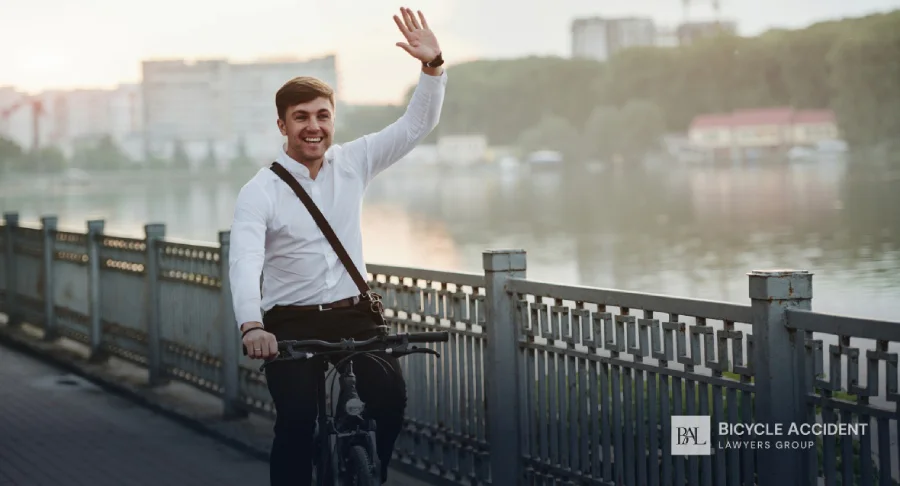
Every cyclist should know three essential bike hand signals. To go left, extend your left arm straight out to the side. For a right turn, point your right arm straight out, or raise the left one upward at a 90-degree angle. To signal a stop, lower it downward with your palm open and facing behind you.
These universal gestures are recognized across all 50 states and should be given approximately 100 feet before changing course. There are nine cues to learn in total, but even mastering the three core movements above will ensure a smoother and safer cycling experience every time you ride.
- Key Takeaways
- Why Bike Hand Signals Prevent Crashes
- Are Bike Hand Signals Required by Law?
- How to Signal Each Bike Hand Signal
- Group Riding Hand Signals for Cyclists
- How Do You Use Bike Signals to Stay Safe?
- What to Do If You Are Injured Despite Proper Stopping and Signaling
- Get a FREE case evaluation today
Key Takeaways
- Three core signals cover most riding: left arm out, right arm out, left palm down.
- Start your signal roughly 100 feet before you turn so drivers have time to react.
- Hold each gesture at least three seconds so a driver actually registers and reacts.
- Practice one-handed braking somewhere safe before you rely on it in moving traffic.
- You can signal a right turn two ways: right arm extended, or left arm raised upward.
- All 50 states treat these signals as mandatory, though California and New York word rules differently.
- Look back before you signal; scanning confirms the gap and draws drivers’ attention to you.
- Riding in a group, point down at potholes and debris so riders behind you react.
- Signaling consistently can reduce your share of fault if a driver hits you anyway.
Why Bike Hand Signals Prevent Crashes
According to the most recent cycling crash statistics, over 1,000 riders died on American roads in 2022. That makes up almost 3% of all traffic fatalities in the country. While different contributing factors may have led to these crashes, the most critical incidents involve a motor vehicle.
A timely signal may, if not prevent a serious crash with a car, then at least make it less likely that a rider gets hit. Moreover, basic bike signals are also vital because:
- They enhance the rider’s confidence and ensure a more controlled and pleasant experience on bikes.
- They make your behavior predictable to motorists, reducing the chance of a miscommunication that leads to a collision.
- They can decrease liability or the percentage of fault should a crash take place.
- It is a rider’s legal responsibility to use turn signals on bikes. All 50 states recognize them as mandatory.
Are Bike Hand Signals Required by Law?
Although there is no single federal law that outlines specific requirements when it comes to bike hand signals, all 50 states recognize them as a universal and mandatory form of communication on the road. Certain rules may differ from state to state.
For example, in California, bicyclists must use these cues 100 feet before making a change in direction. In New York, VTL §1237 outlines the precise gestures that bicyclists must use when changing course. At the same time, the Washington state legislature stresses how these cues should be given. In Texas, a bicyclist may forego these gestures if they would compromise the rider’s road safety.
Generally, the law regards these practices as effective measures that can prevent serious crashes. However, unlike in the case of motor vehicle operators, it is challenging to enforce and regulate compliance with these regulations. The states have to rely on individual responsibility and awareness of local bicyclists to use those cues.
How to Signal Each Bike Hand Signal
Bike hand signals are one of the clearest and most reliable ways to enhance your protection when navigating the streets. Most people who ride bikes are familiar with the concept but not to the point of using these gestures in practice.
Every movement that signifies a change in direction, an obstacle, or a full stop takes only a moment, but it gives nearby motorists the notice they need to react and avoid a collision. Understanding these cues is important not only for riders but also for vehicle operators and pedestrian traffic, who must know how to read and decode them to avoid confusion and dangerous situations.
Left Turn
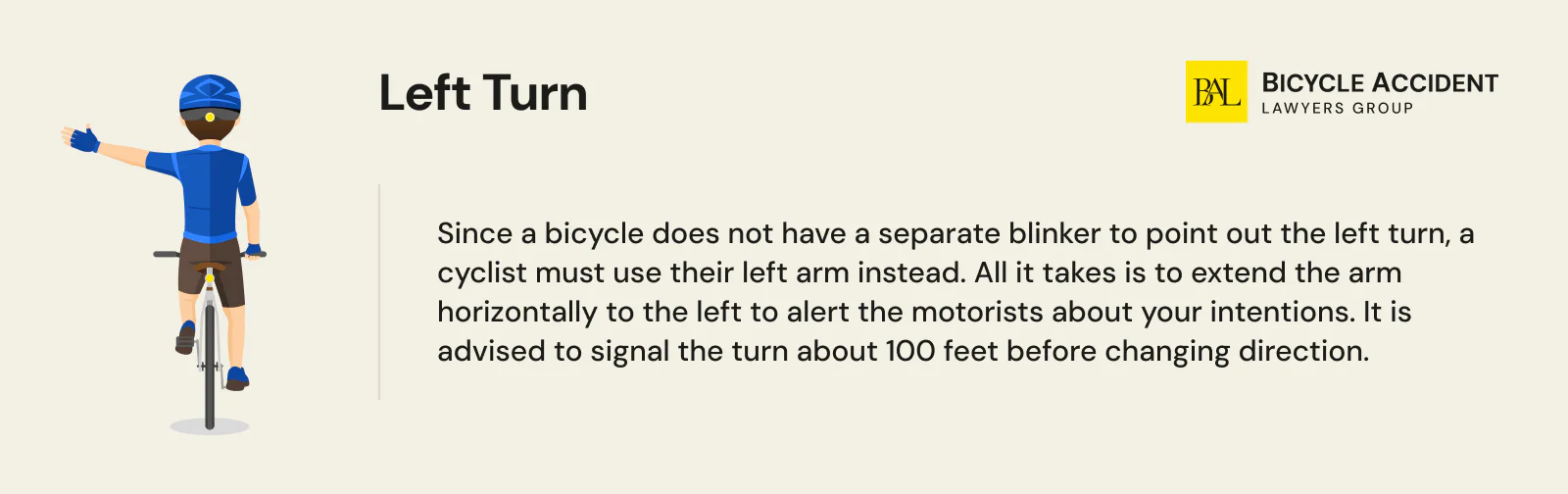
Since bikes do not have a separate blinker to signal a change of direction, a cyclist must extend to the left instead. Point horizontally to alert motorists about your intention. It is advised to communicate approximately 100 feet before shifting course.
Right Turn (Option 1)
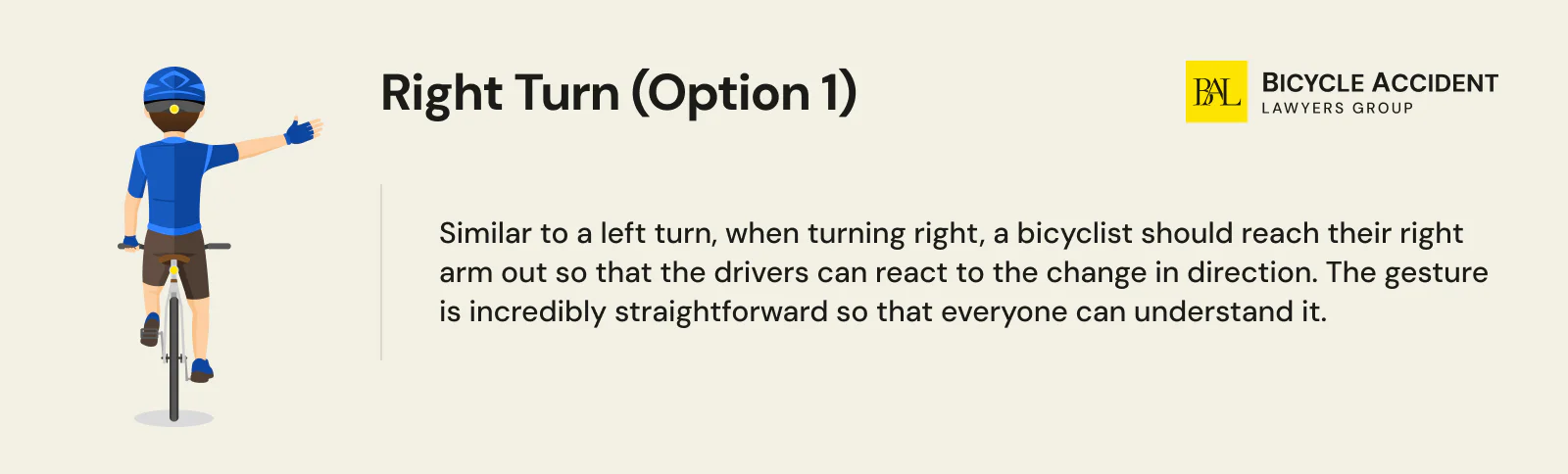
When going right, a bicyclist should extend their right arm straight out so that motorists can react to the change in direction. The gesture is straightforward and easy for everyone to understand. This is the clearest of the two options available.
Right Turn (Option 2)
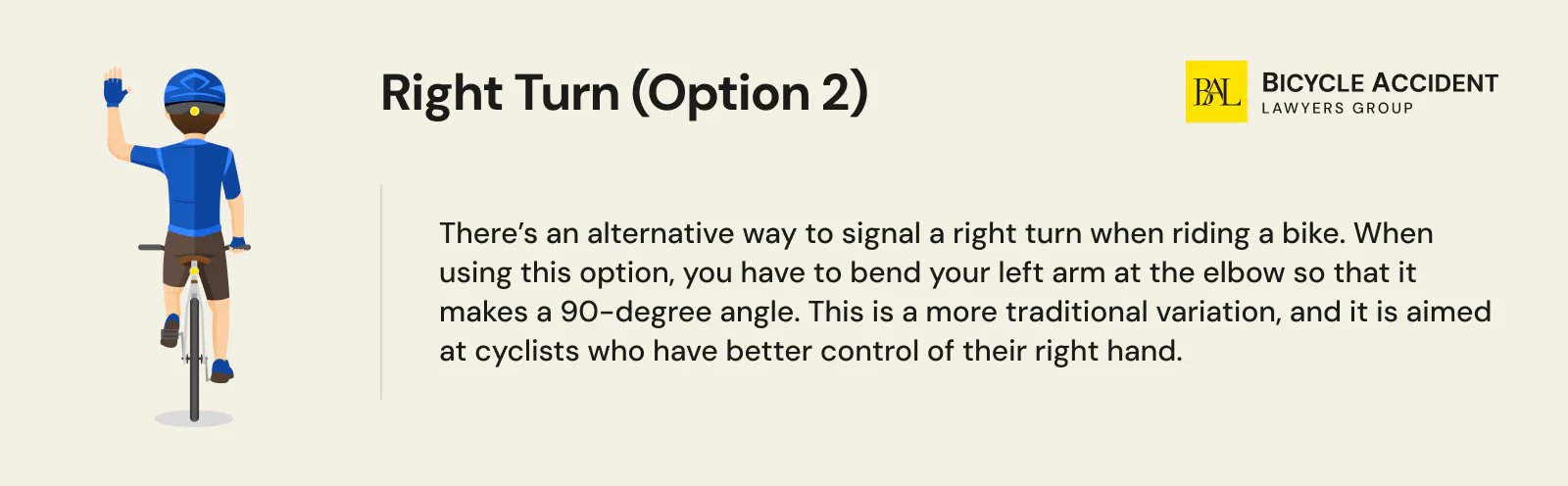
There is an alternative way to signal going right when riding a bike. Raise upward at the elbow so that it makes a 90-degree angle. This is a more traditional variation, and it is aimed at those who have better control of their bike with their right hand on the bars.
Stop
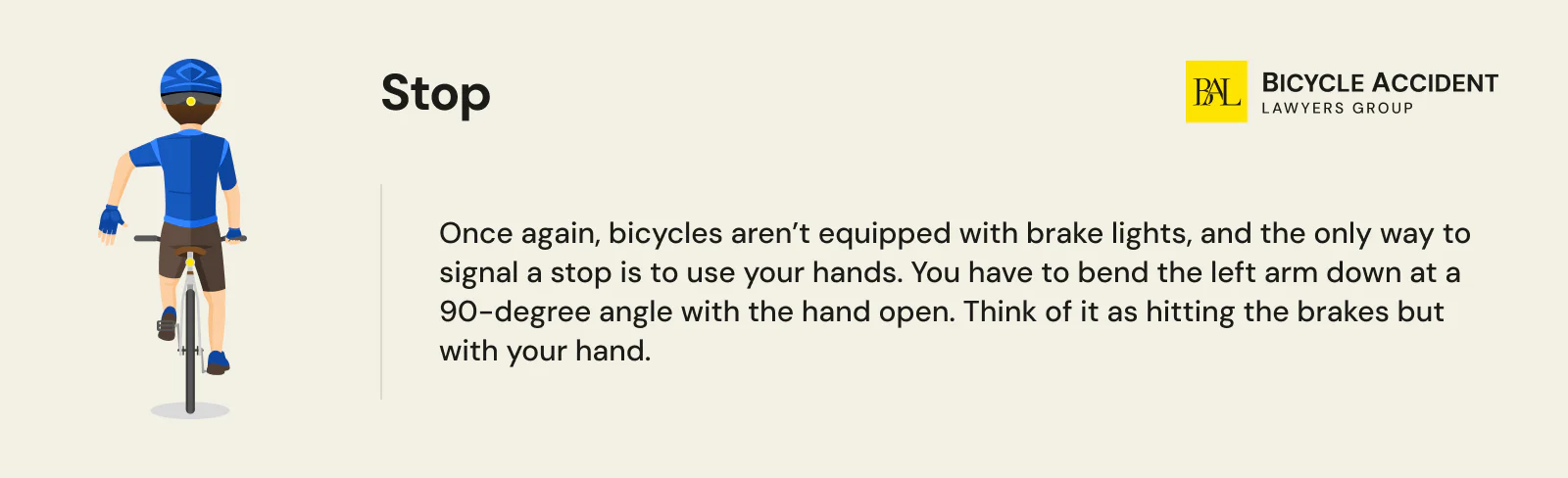
Bikes are not equipped with brake lights, and the only way to signal a stop is to use your hands. Lower downward with your palm open and facing behind you. Think of it as hitting the brakes visually.
Slowing Down
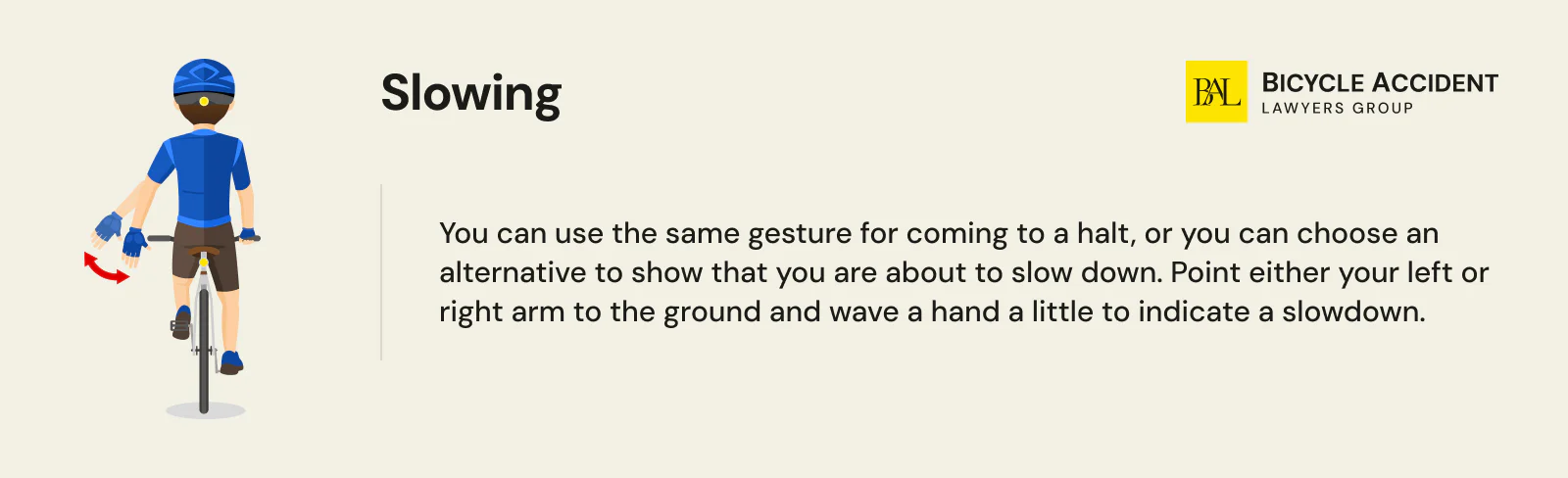
You can use the same gesture as above, or you can choose an alternative to show that you are about to slow down. Point either to the left or right toward the ground and wave slightly to indicate a gradual slowdown.
Taking the Lane
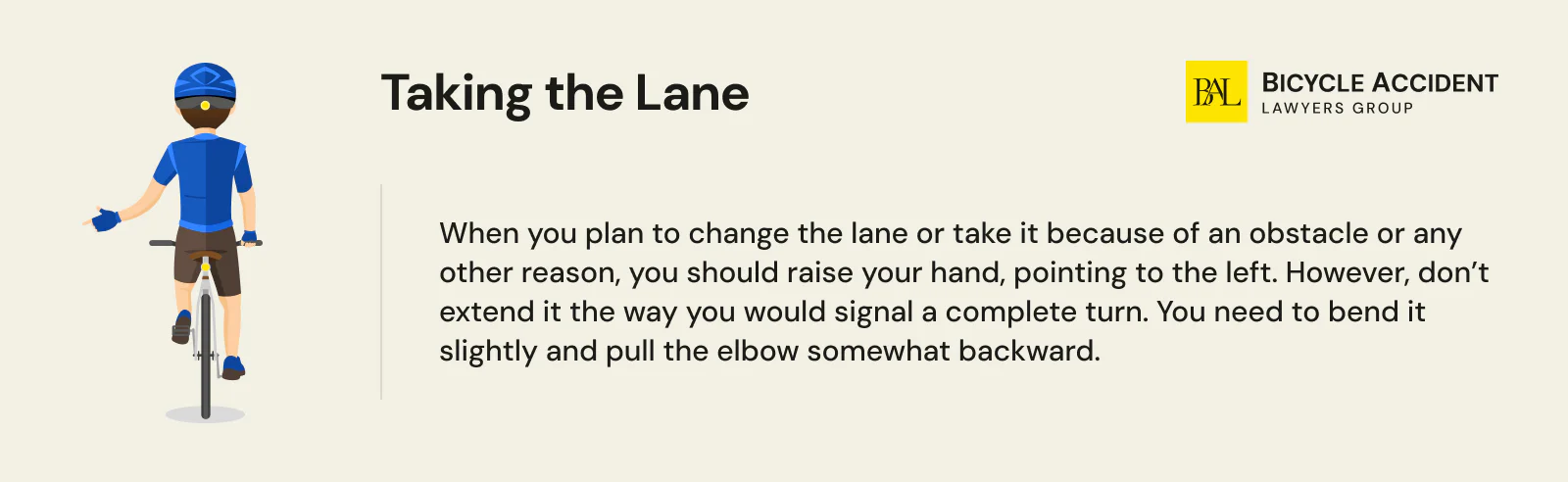
When you plan to change the lane or take it because of an obstacle, raise up and point to the left, but keep it slightly bent rather than fully extended. This shorter gesture tells motorists you are merging, not making a full change of course.
Thanking
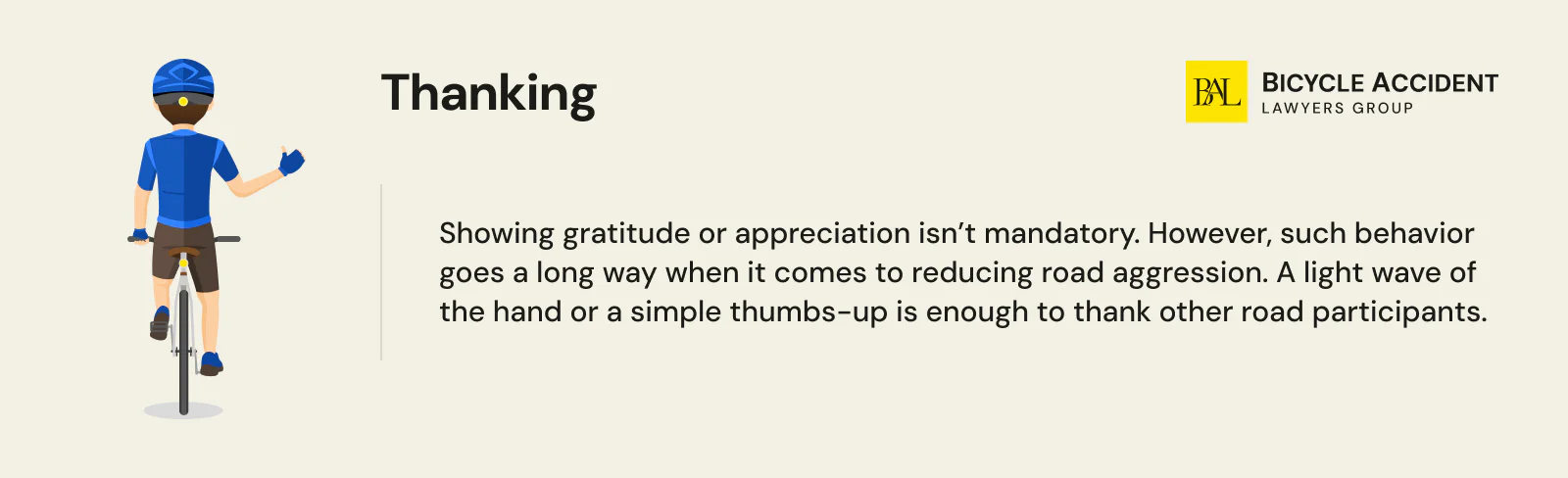
Showing gratitude or appreciation is not mandatory. However, such behavior goes a long way when it comes to reducing aggression. A light wave or a simple thumbs-up is enough to thank other users for yielding or giving you space.
Group Riding Hand Signals for Cyclists
When in a group, additional gestures help keep everyone informed about conditions and changes in movement. These are especially important because riders behind you may not see hazards or obstacles until it is too late.
Road Hazard
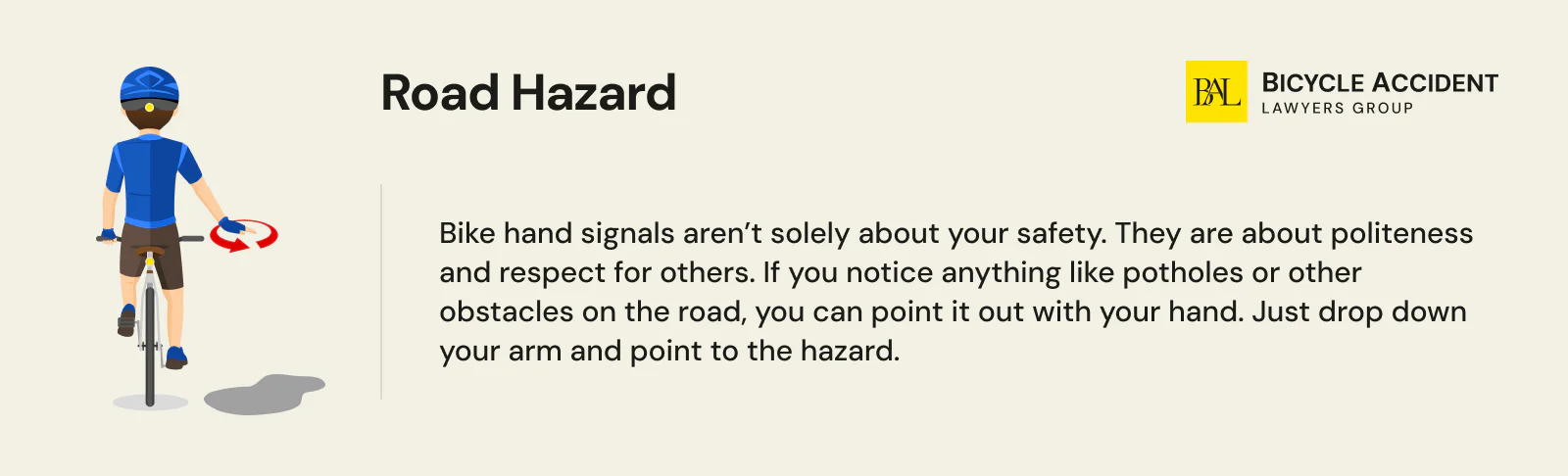
If you notice anything like potholes, debris, or other obstacles, point it out. Drop down and point directly at the hazard so that fellow riders and motorists behind you know to avoid it.
You Can Overtake Me
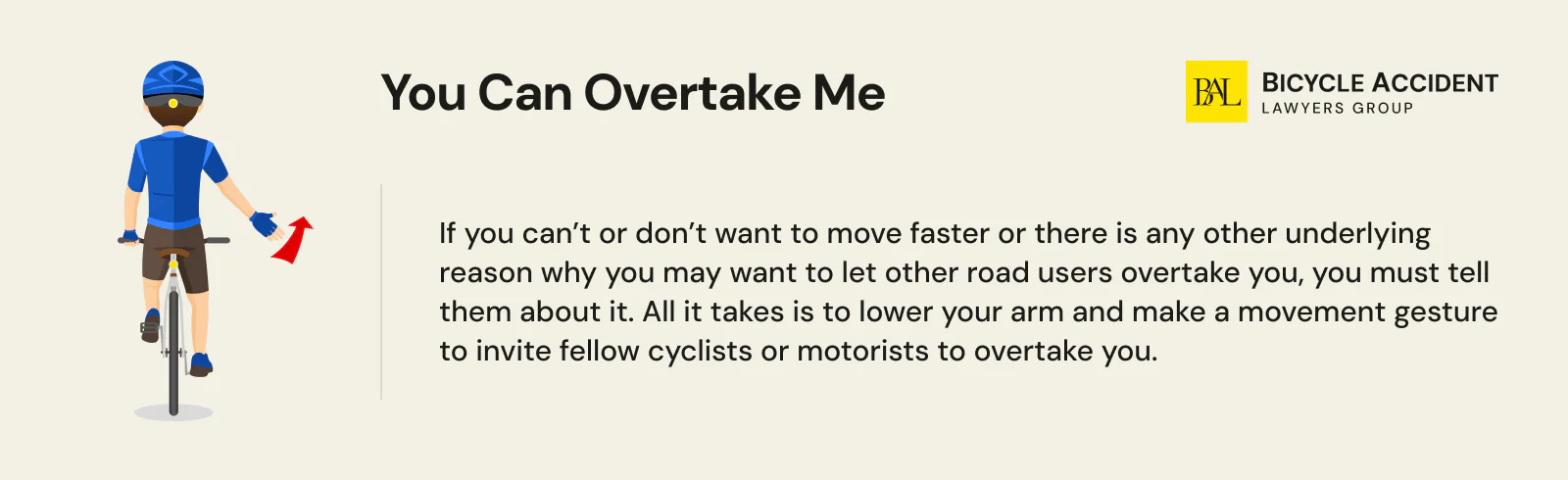
If you cannot or do not want to move faster, or there is any other reason why you want to let others pass, wave forward to invite fellow cyclists or motorists to overtake you.
Passing Obstacles
When you are moving around parked cars, debris, or other obstacles, wave your hands back to alert riders behind you. This tells the group that you are shifting your line and they should prepare to follow or adjust their position.
How Do You Use Bike Signals to Stay Safe?
Learning these cues is only part of the road to safety. It matters greatly that you are aware of the gestures you can signal while riding. However, it is vital to incorporate them into your routine. Here are a few practical tips that will enhance your protection:
-
Communicate early
Plan your journey so that you know about upcoming turns and can signal your intentions in time. Begin approximately 100 feet before changing course to give motorists enough notice.
-
Scan your surroundings
As you prepare to change direction, look back to make sure it is safe to proceed. This double-check will attract the attention of drivers and cyclists who otherwise could have missed your gesture.
-
Communicate clearly
Do not rely on the assumption that nearby motorists or a pedestrian has noticed you. A clear, confident gesture is the best way to be seen.
-
Hold your position
It may be challenging to control your vehicle for an extended period. However, hold your signal for at least three seconds to allow a nearby driver to register and react to it.
-
Be confident
If you are not confident about your gestures, other users cannot be confident in your upcoming actions. That is why you should make a clear and decisive motion each time.
-
Maintain control
Make sure you can safely operate your brakes while using the other to signal. Practice one-handed braking in a safe area before relying on it in traffic. If you feel unstable at any point, grip the handlebars immediately.
For more guidance on proper cycling technique, see the NHTSA bicycle safety page.
What to Do If You Are Injured Despite Proper Stopping and Signaling
The laws of America refer to riders on bikes as legal users of the road who have to abide by all the rules and regulations that other vehicle operators do. However, unlike a car driver, you do not have the additional protection that a vehicle provides. You must ensure your safety through your own actions, and understanding the risk of riding without proper communication is vital.
Sometimes, negligent motorists miss a rider’s cues, no matter how well-planned and clear they are. If you are injured in a bicycle accident, knowing what to do afterward can protect your rights and strengthen your claim. Proper use of these gestures can also reduce your liability under comparative negligence rules, because it demonstrates that you took reasonable steps to communicate with other drivers on the road.
If the unfortunate happens and you’ve been hurt in one of these crashes, contact us for a free case consultation. Our legal team will evaluate your claim and advise you on how to protect your rights and recover the compensation you deserve.
Don’t miss the chance to get the compensation for your injuries. Start a FREE case evaluation now to know how much you can get!


Robert Goldwater is a cyclist representing cyclists. He has practiced personal injury and wrongful death law for more than 20 years, graduating with Honors from Arizona State University Law School, and has helped recover over $1 billion for clients, including injured cyclists.